


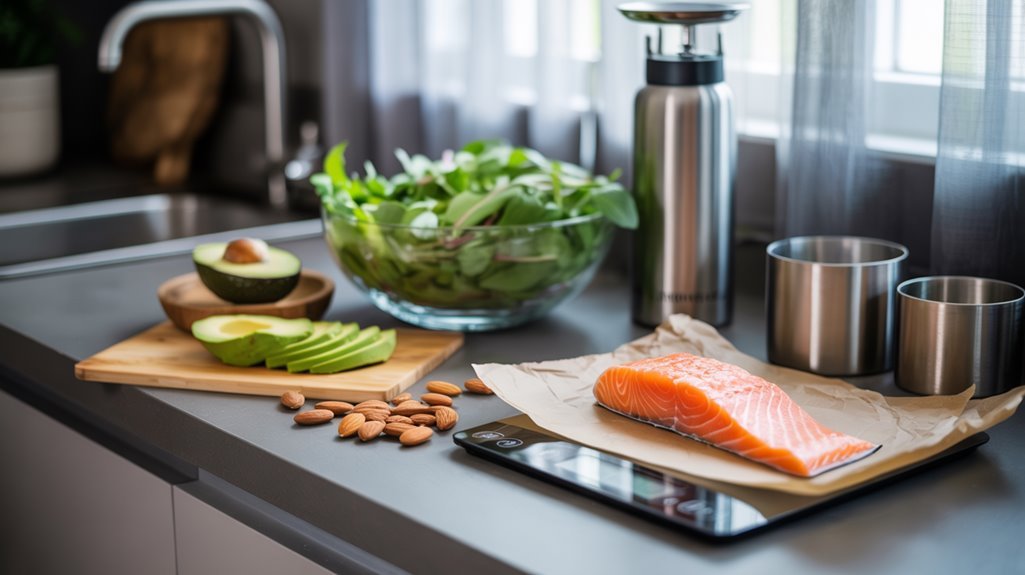
You’ll achieve sustainable fat loss by creating a moderate caloric deficit of 300-500 calories daily while prioritizing protein intake at 0.7-1 gram per pound of body weight. Space meals 3-4 hours apart, fill half your plate with non-starchy vegetables, and aim for 25-35 grams of fiber daily. Track your food intake, use smaller plates for portion control, and eat slowly to enhance satiety. These evidence-based strategies work together to optimize your metabolism and results.
Key Takeaways
- Create a moderate caloric deficit of 300-500 calories daily by calculating your TDEE and subtracting 15-20%.
- Consume 0.7-1 gram of protein per pound of body weight daily, distributed across meals for optimal muscle preservation.
- Fill half your plate with non-starchy vegetables to reduce calorie intake while increasing nutrient density and satiety.
- Eat slowly with 20-second pauses between bites to reduce overall calorie consumption by 10-15%.
- Plan and prepare meals weekly to avoid impulsive food choices and maintain consistent portion control.
Create a Sustainable Caloric Deficit for Steady Fat Loss
When you’re aiming for fat loss, creating a caloric deficit remains the fundamental principle—you need to consume fewer calories than your body burns. Nonetheless, extreme deficits can backfire, triggering metabolic slowdown and muscle loss. Research shows moderate deficits of 300-500 calories daily yield ideal results for sustainable weight management.
Calculate your total daily energy expenditure (TDEE) and subtract 15-20% to establish your target intake. You’ll preserve lean mass while promoting steady fat loss of 1-2 pounds weekly. Track your food intake using apps or journals to guarantee accuracy. Apply caloric deficit strategies like portion control, meal planning, and choosing nutrient-dense foods that provide satiety. Adjust your deficit based on progress, energy levels, and hunger cues. This evidence-based approach prevents metabolic adaptation while maintaining long-term adherence.
Prioritize Protein Intake to Preserve Muscle Mass
Protein serves as the cornerstone of muscle preservation during fat loss phases. When you’re in a caloric deficit, your body may break down muscle tissue for energy. By consuming adequate protein, you’ll minimize this muscle loss while maximizing fat reduction.
Aim for 0.7-1 gram of protein per pound of body weight daily. You’ll find quality protein sources in lean meats, fish, eggs, Greek yogurt, legumes, and tofu. These foods provide essential amino acids that support muscle repair and maintenance.
Distribute your protein intake throughout the day, consuming 20-30 grams per meal. This strategy optimizes muscle protein synthesis and helps control hunger. Research shows that higher protein diets preserve lean mass more effectively than low-protein approaches during weight loss, ensuring you’ll maintain strength and metabolic rate.
Balance Your Macronutrients for Optimal Results
You’ll optimize fat loss by following precise protein intake guidelines while strategically applying carb cycling based on your activity levels. Research shows consuming 0.8-1.2 grams of protein per pound of body weight maintains muscle mass during caloric deficits, while alternating between higher and lower carbohydrate days can enhance metabolic flexibility. This macronutrient balance helps regulate hormones, preserve lean tissue, and sustain energy throughout your fat loss journey.
Protein Intake Guidelines
A foundation of successful fat loss lies in consuming adequate protein while maintaining proper macronutrient balance. You’ll need approximately 0.8-1.2 grams of protein per pound of body weight daily to preserve muscle mass during caloric deficit. This range supports metabolic function and reduces hunger between meals.
Choose lean protein sources like chicken breast, fish, Greek yogurt, and legumes. These options provide essential amino acids without excessive calories. Protein timing matters for optimizing muscle protein synthesis. Distribute your intake across 3-4 meals, consuming 20-30 grams per serving.
Research shows that spreading protein throughout the day enhances satiety and prevents muscle breakdown. You’ll experience better appetite control when each meal contains adequate protein, making adherence to your nutrition plan more sustainable.
Carb Cycling Strategies
While maintaining adequate protein forms the foundation of fat loss nutrition, strategically varying your carbohydrate intake can enhance metabolic flexibility and accelerate results. Carb cycling involves alternating between high, moderate, and low-carb days based on your training schedule and energy balance requirements.
On high-intensity workout days, you’ll consume 1.5-2g of carbs per pound of body weight to fuel performance and recovery. During moderate training, reduce intake to 0.75-1g per pound. Rest days warrant 0.3-0.5g per pound to promote fat oxidation while preserving muscle tissue.
This approach optimizes hormonal responses, particularly insulin sensitivity and leptin levels. You’re fundamentally teaching your body to efficiently employ both glucose and fat for fuel, preventing metabolic adaptation that often stalls fat loss progress.
Time Your Meals to Support Metabolism
When you eat matters almost as much as what you eat for ideal fat loss and metabolic function. Research shows meal frequency affects hormonal balance and energy expenditure. You’ll optimize metabolism by spacing meals 3-4 hours apart and avoiding late-night eating.
| Time Window | Meal Type | Metabolic Effect |
|---|---|---|
| 6-8 AM | High Protein | Boosts morning metabolism |
| 12-1 PM | Balanced Macro | Sustains energy levels |
| 3-4 PM | Light Snack | Prevents afternoon crash |
| 6-7 PM | Moderate Dinner | Supports overnight recovery |
| 8+ PM | Avoid Eating | Enhances fat oxidation |
Timing strategies like front-loading calories earlier maximize insulin sensitivity. You’ll burn more fat by consuming 70% of daily calories before 3 PM. Stop eating 2-3 hours before bed to promote growth hormone release during sleep.
Stay Hydrated to Enhance Fat Burning

How much water you drink directly impacts your body’s ability to metabolize fat efficiently. When you’re dehydrated, your liver works harder to maintain fluid balance instead of metabolizing stored fat. Research shows that drinking 500ml of water can increase metabolic rate by 30% for up to 40 minutes.
You’ll maximize hydration benefits by consuming at least 8-10 glasses daily, though individual needs vary based on activity level and climate. Proper water intake also helps suppress appetite, as thirst signals often masquerade as hunger cues. Furthermore, staying hydrated supports exercise performance, enabling you to train harder and burn more calories.
For best results, drink water before meals, during workouts, and consistently throughout the day. Cold water may provide a slight metabolic boost as your body expends energy warming it.
Choose Whole Foods Over Processed Options
Although processed foods offer convenience, you’ll achieve better fat loss results by prioritizing whole foods in your diet. Whole food benefits include higher nutrient density, better satiety, and improved metabolic function. These foods contain natural fiber, vitamins, and minerals that support your body’s fat-burning processes.
Processed food drawbacks greatly hinder weight loss efforts. They’re typically high in added sugars, unhealthy fats, and sodium while lacking essential nutrients. These foods often trigger blood sugar spikes and subsequent crashes, increasing hunger and cravings.
You’ll find whole foods naturally regulate appetite better than their processed counterparts. Choose fresh vegetables, fruits, lean proteins, whole grains, nuts, and seeds. When shopping, stick to the store’s perimeter where fresh foods are displayed. This simple strategy helps you avoid processed options and supports sustainable fat loss.
Control Portion Sizes Without Feeling Deprived
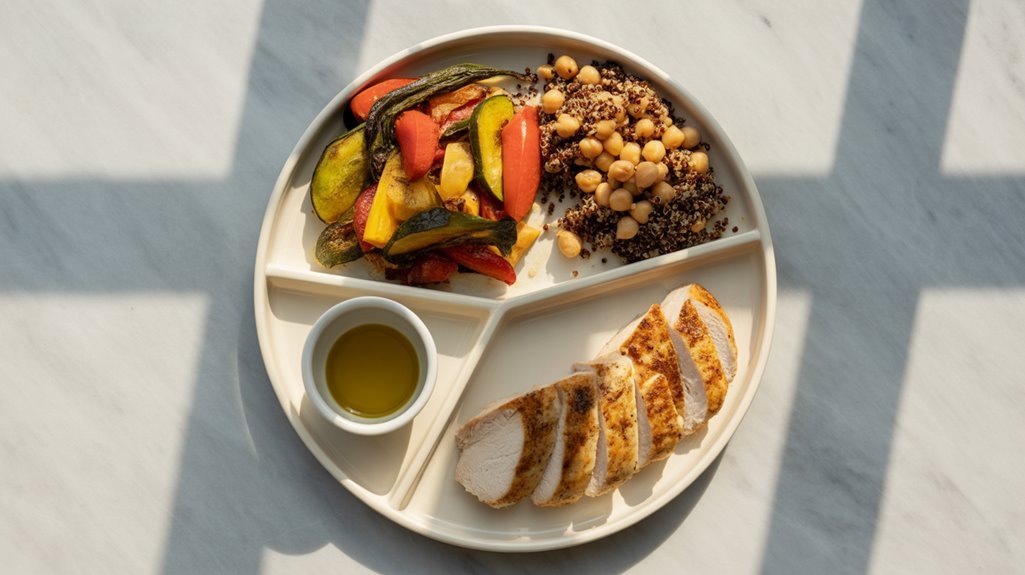
You can maintain satisfying portions while reducing caloric intake through simple behavioral modifications. Research shows that using 9-inch plates instead of 12-inch ones leads to a 22% reduction in consumption, while eating slowly allows your brain’s satiety signals to register before overeating occurs. Loading half your plate with non-starchy vegetables provides volume and fiber that promotes fullness with minimal calories.
Use Smaller Plates Daily
Research shows that plate size directly influences how much you eat, with studies indicating that using 9-10 inch plates instead of 12-inch ones can reduce calorie intake by 22% without conscious effort. This plate psychology phenomenon occurs because your brain perceives portions relative to plate size. You’ll naturally serve less food on smaller dishes while maintaining visual satisfaction.
| Plate Size | Average Calories |
|---|---|
| 12 inches | 723 calories |
| 10 inches | 566 calories |
| 9 inches | 527 calories |
| 8 inches | 481 calories |
| 7 inches | 445 calories |
Your portion perception adapts quickly to smaller plates. You’ll feel equally satisfied because the plate appears full, triggering psychological satiety cues. Switch your dinnerware today—it’s an effortless strategy that works subconsciously to control portions without measuring or restricting.
Eat Slowly Between Bites
Twenty seconds between bites can transform your eating experience and naturally reduce calorie intake by 10-15%. You’ll activate mindful eating pathways that signal fullness before overeating occurs. This practice enhances digestive benefits by increasing saliva production and improving nutrient absorption.
Put your fork down between bites. Chew thoroughly while counting to twenty. You’re giving your brain time to register satiety signals that typically lag 15-20 minutes behind actual food consumption. Research shows slow eaters consume fewer calories and report greater meal satisfaction.
This technique works because you’re disrupting automatic eating patterns. You’ll taste food more intensely, recognize hunger cues accurately, and stop eating when satisfied rather than stuffed. Combined with smaller plates, you’ve created a powerful portion control system without restrictive dieting.
Fill Up With Vegetables
Vegetables offer the ultimate portion control hack—they’re nutrient-dense yet calorie-sparse, allowing generous servings without derailing fat loss goals. You’ll naturally reduce calorie intake when half your plate contains non-starchy vegetable varieties like leafy greens, broccoli, and bell peppers.
| Vegetable Type | Volume per 100 Calories |
|---|---|
| Spinach | 435g (15 cups) |
| Cucumber | 625g (4 cups) |
| Broccoli | 294g (3 cups) |
| Cauliflower | 400g (4 cups) |
Research shows high-volume eating promotes satiety through stomach distension and fiber content. You can experiment with creative recipes—try cauliflower rice, zucchini noodles, or roasted vegetable medleys. These swaps maintain meal satisfaction while creating the caloric deficit necessary for fat loss. The fiber also slows digestion, stabilizing blood sugar and extending fullness between meals.
Incorporate Fiber-Rich Foods for Better Satiety
When you’re trying to lose fat, feeling hungry between meals can derail your progress and lead to overeating. That’s where fiber-rich foods become your powerful ally. By incorporating diverse fiber sources into your meals, you’ll experience enhanced satiety benefits that naturally reduce your calorie intake.
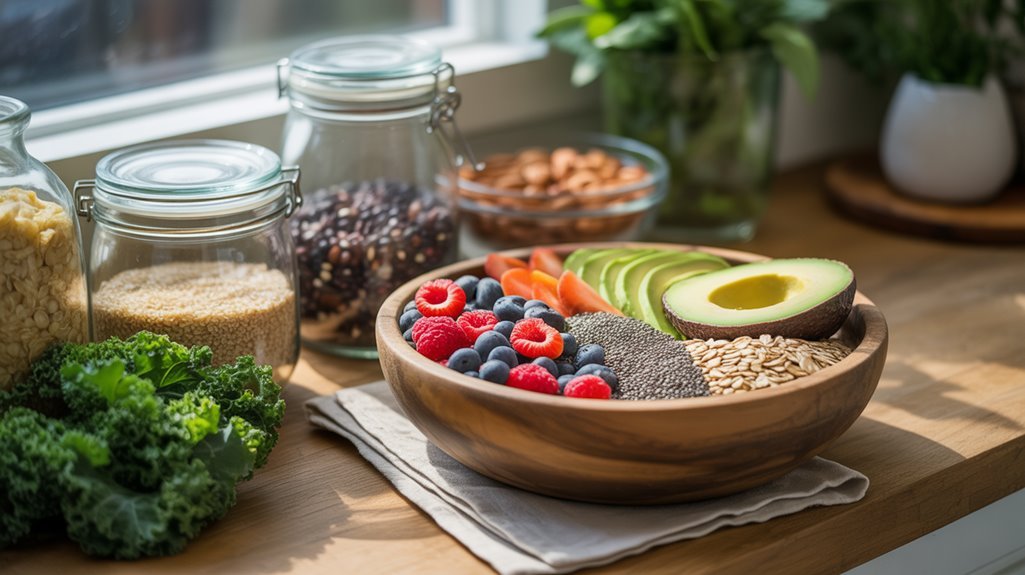
Aim for 25-35 grams of fiber daily from whole grains, legumes, fruits, and vegetables. Soluble fiber forms a gel-like substance in your digestive tract, slowing digestion and promoting fullness. Insoluble fiber adds bulk to your meals without extra calories.
Start your day with oatmeal topped with berries, snack on apples with skin, and include beans or lentils in your lunch. These choices stabilize blood sugar levels and keep hunger hormones in check for hours.
Plan and Prep Meals to Avoid Impulsive Choices
Planning your meals weekly and preparing them in advance greatly reduces the likelihood of making poor food choices when you’re hungry or pressed for time. You’ll find that dedicating a few hours to batch cooking proteins, chopping vegetables, and portioning meals creates a system that supports your fat loss goals. Research shows that individuals who meal prep consume fewer calories and make more nutritious choices compared to those who decide what to eat spontaneously.
Weekly Meal Planning
Successful fat loss often hinges on the decisions you make before hunger strikes. Weekly meal planning eliminates guesswork and prevents impulsive food choices that derail progress. You’ll control portions, guarantee meal variety, and maintain consistent calorie intake when you map out seven days of meals.
| Day | Breakfast | Lunch | Dinner |
|---|---|---|---|
| Monday | Greek yogurt parfait | Grilled chicken salad | Salmon with vegetables |
| Tuesday | Veggie omelet | Turkey wrap | Lean beef stir-fry |
| Wednesday | Overnight oats | Quinoa bowl | Baked cod with sweet potato |
| Thursday | Protein smoothie | Lentil soup | Chicken breast with rice |
| Friday | Whole grain toast with eggs | Tuna salad | Turkey meatballs |
Include healthy snack options between meals: nuts, fruits, or vegetables with hummus. This structured approach supports sustainable fat loss while meeting nutritional needs.
Batch Cooking Strategies
Your meal plan serves as a blueprint, but batch cooking transforms that plan into ready-to-eat meals that prevent dietary detours. You’ll save considerable time by preparing proteins, grains, and vegetables in bulk during designated meal prep sessions. Cook multiple chicken breasts, portion brown rice, and roast sheet pans of vegetables simultaneously.
Proper ingredient storage maintains food quality and safety. You’ll need airtight containers for refrigerated items lasting 3-4 days and freezer-safe containers for longer preservation. Label everything with contents and dates. Pre-portion meals into individual containers to control serving sizes and streamline your daily routine.
This systematic approach eliminates decision fatigue when you’re hungry and vulnerable to poor choices. You’re fundamentally creating your own healthy convenience foods that align with your fat loss goals.
Track Your Progress and Adjust as Needed
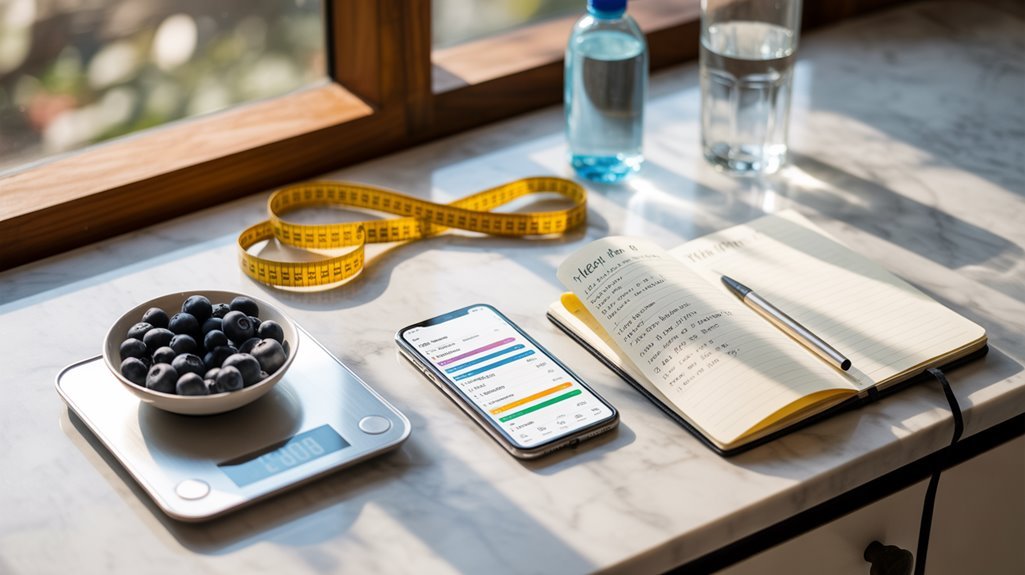
When you’re working toward fat loss, monitoring your progress provides essential feedback that helps you determine whether your current approach is working. Progress tracking involves more than stepping on a scale—you’ll benefit from measuring waist circumference, taking progress photos, and monitoring energy levels. Weigh yourself weekly at the same time under consistent conditions.
Your adjustment strategies should respond to data trends. If weight loss stalls for two weeks in spite of adherence, reduce daily calories by 100-150 or increase activity. When you’re losing more than 2 pounds weekly, add 100-200 calories to prevent muscle loss. Track strength levels during workouts—declining performance signals excessive restriction. Document sleep quality and hunger levels to identify sustainability issues. Remember, fat loss isn’t linear; focus on monthly averages rather than daily fluctuations.
Frequently Asked Questions
Can I Lose Fat Without Exercising at All?
Yes, you can lose fat without exercise by creating a caloric deficit through diet choices alone. You’ll need to consume fewer calories than you burn daily. Nevertheless, combining diet with exercise provides better overall health outcomes.
How Do Supplements Like Fat Burners Actually Work?
Fat burner ingredients like caffeine and green tea extract can slightly boost your metabolism and energy expenditure. Nonetheless, supplement effectiveness is limited – they’ll only enhance fat loss by 1-3% when you’re already following a proper diet.
Will Eating Late at Night Prevent Fat Loss?
Late night snacking doesn’t inherently prevent fat loss. Your metabolism effects remain consistent throughout the day. What matters is your total caloric intake versus expenditure. If you’re within your daily deficit, timing won’t greatly impact results.
What Role Do Hormones Play in Stubborn Fat Areas?
Your hormonal balance directly influences fat distribution patterns throughout your body. Estrogen, testosterone, cortisol, and insulin determine where you’ll store fat—typically hips and thighs for women, abdomen for men. Genetics and age also affect these patterns.
How Long Does It Take to See Visible Fat Loss Results?
You’ll typically see visible results from fat loss within 4-8 weeks of consistent caloric deficit. Individual factors like starting body composition, genetics, and adherence affect timing. Most notice changes in how clothes fit before visual differences.
Conclusion
You’ve learned that sustainable fat loss requires a strategic approach combining caloric deficit, adequate protein, and balanced macronutrients. By timing meals appropriately, staying hydrated, and controlling portions through fiber-rich foods, you’ll optimize your body’s fat-burning potential. Meal planning prevents impulsive decisions that derail progress. Remember to track your results and adjust your approach based on objective data. These evidence-based strategies, when applied consistently, create the metabolic environment necessary for successful, long-term fat loss.