

Your journey to leaner living starts with planning just three days ahead—it’s more manageable than weekly planning and reduces decision fatigue by 50%. You’ll build balanced plates with half non-starchy vegetables, palm-sized protein portions, and fist-sized complex carbs. Batch cooking proteins saves four hours weekly while boosting vegetable intake. Smart shopping with generic brands cuts costs by 25-40% without sacrificing nutrition. These evidence-based strategies transform how you approach food for sustainable weight loss.
Key Takeaways
- Plan meals 72 hours ahead using three dinner recipes and repurpose leftovers for lunches to reduce decision fatigue.
- Build balanced plates with half non-starchy vegetables, palm-sized lean protein, and fist-sized complex carbohydrates for sustainable weight loss.
- Batch cook proteins and vegetables weekly, saving four hours and increasing vegetable consumption by 50%.
- Switch to generic brands and shop seasonal produce to reduce grocery costs by 25-40% while maintaining nutritional quality.
- Use color-coded containers for portion control, improving adherence to healthy eating patterns by 40% without measuring tools.
Start Small: The Power of Planning Just Three Days Ahead
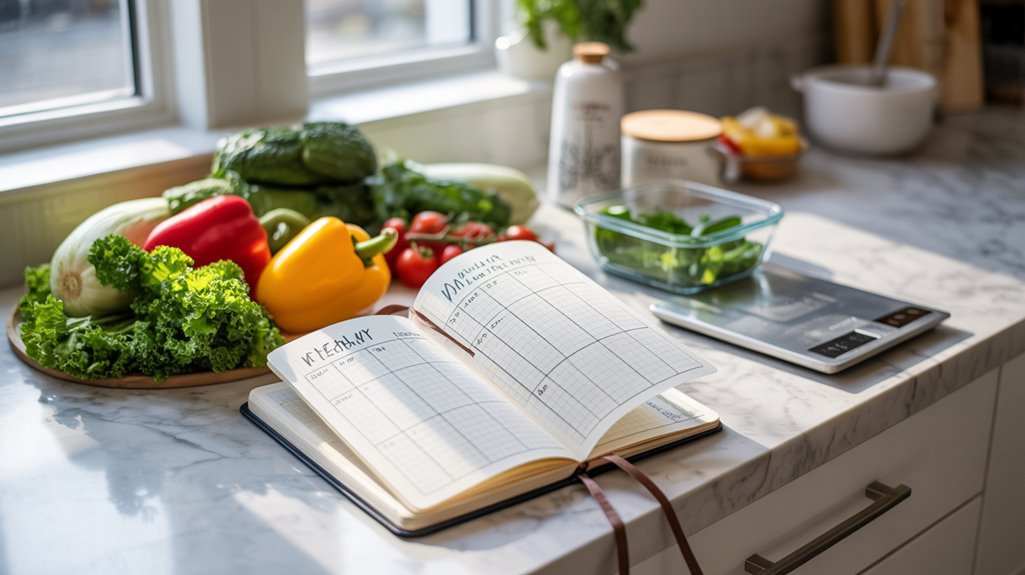
When you’re new to meal planning, trying to map out an entire week’s worth of meals can feel overwhelming and lead to burnout before you’ve even started. That’s why the three day framework offers a more manageable approach. By planning just 72 hours ahead, you’ll reduce decision fatigue while building sustainable habits.
Simple strategies make this method effective. Choose three dinner recipes, then use leftovers for lunches. Batch-cook proteins like grilled chicken or beans that work across multiple meals. Keep breakfast consistent with options like overnight oats or egg muffins.
This shorter planning window allows flexibility for schedule changes while ensuring you’ve got nutritious meals ready. As you master three-day planning, you’ll naturally develop the confidence to extend your planning horizon without feeling overwhelmed.
Master Your Macros: Building Balanced Plates for Sustainable Weight Loss
Understanding macronutrients forms the foundation of sustainable weight loss, yet you don’t need a nutrition degree to create balanced meals. You’ll achieve better results by focusing on simple macro tracking principles that prioritize whole foods over complicated calculations.
Master macronutrients through whole foods, not complex calculations—sustainable weight loss starts with simple tracking principles.
Build your plates using this evidence-based framework:
- Fill half with non-starchy vegetables for fiber and micronutrients
- Add a palm-sized portion of lean protein for satiety and muscle preservation
- Include a fist-sized serving of complex carbohydrates for sustained energy
This approach naturally creates balanced meals while maintaining a caloric deficit. You’re not just counting numbers—you’re developing sustainable eating patterns. Research shows that protein intake between 0.8-1g per pound of body weight supports fat loss while preserving lean mass.
Batch Cooking Basics: Prep Once, Eat Well All Week
While balanced plates create the foundation for weight loss success, you’ll struggle to maintain consistency without a practical preparation strategy. Batch cooking techniques transform your kitchen into an efficiency powerhouse. You’ll need meal prep essentials: quality containers, sharp knives, and two sheet pans. Start by choosing three proteins, roasting vegetables in bulk, and preparing whole grains simultaneously. You’re maximizing oven space while minimizing active cooking time.
Research shows meal preppers consume 50% more vegetables and save four hours weekly. You’ll eliminate decision fatigue and reduce impulsive food choices. Schedule Sunday afternoons for prep—wash, chop, and portion everything. Store proteins separately from grains to maintain texture. You’ve now created grab-and-go options that support your weight loss goals throughout the week.
Smart Shopping Strategies: Creating Lists That Support Your Goals
You’ll maximize your meal planning success by creating budget-friendly shopping lists that align with your nutritional goals and financial constraints. Organizing your list according to your store’s layout saves time and reduces impulse purchases that can derail both your budget and health objectives. Research shows that shoppers who use structured lists spend 23% less and make healthier food choices compared to those who shop without a plan.
Budget-Friendly Shopping Lists
Three essential components transform a regular shopping trip into a strategic budget victory: pre-planning your meals, organizing ingredients by store layout, and leveraging seasonal produce prices. You’ll maximize savings when you shop your pantry first, checking existing inventory before creating lists. Studies show organized shoppers save 23% more than impulse buyers.
Master these grocery store hacks:
- Shop perimeter sections first—fresh produce, proteins, and dairy offer better nutrition-per-dollar ratios
- Buy versatile ingredients that work across multiple recipes—whole grains, legumes, frozen vegetables
- Compare unit prices, not package prices—bulk isn’t always cheaper
Your meal planning essentials should prioritize nutrient-dense foods within budget constraints. Choose seasonal fruits and vegetables when they’re abundant and affordable. You’ll build healthier meals while protecting your wallet through strategic shopping.
Organize by Store Layout
Two proven strategies can cut your shopping time by 40% while reducing impulse purchases: mapping your list to match your store’s layout and grouping items by department. Start by creating a simple store map during your next visit, noting where produce, proteins, dairy, and whole grains are located. This aisle strategy prevents backtracking and exposure to processed foods in center aisles.
Organize your list in the order you’ll encounter departments: typically produce first, then perimeter sections for fresh proteins and dairy, finishing with pantry staples. You’ll navigate more efficiently, stick to your nutritional goals, and avoid decision fatigue. Research shows shoppers using layout-based lists spend 23% less on unplanned items while maintaining better adherence to their meal plans.
Portion Control Made Simple: The Container Method for Success
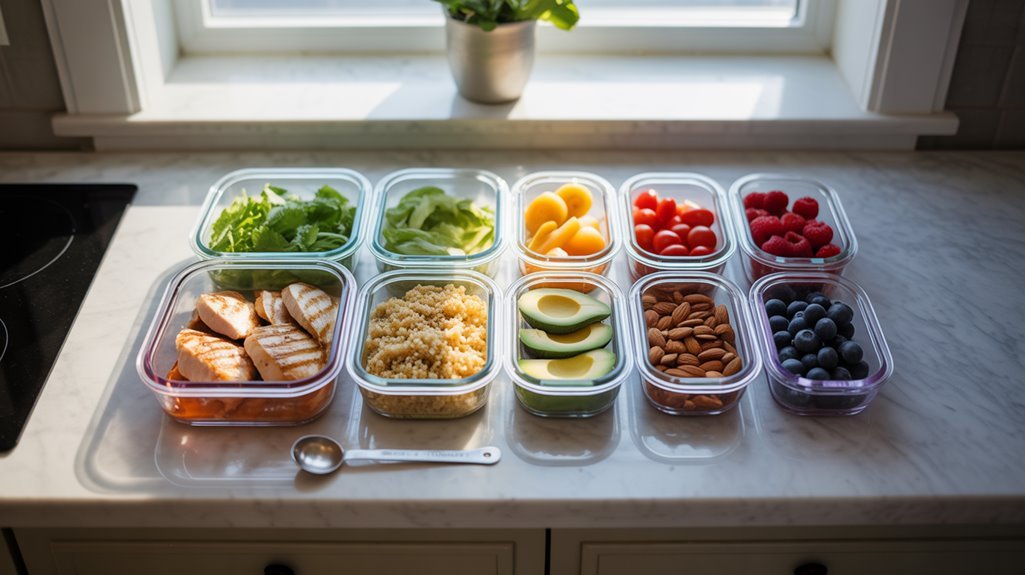
When you’re trying to manage portions without constantly measuring and weighing food, the container method offers a practical solution that’s backed by research. This system uses different container sizes and color coding to create visual guides for proper portions across food groups. You’ll find it eliminates guesswork while teaching sustainable eating habits.
The method assigns particular containers to macronutrient categories:
- Red containers hold proteins (¾ cup)
- Green containers measure vegetables (1 cup)
- Purple containers portion fruits (1 cup)
Studies show visual portion control tools improve adherence to healthy eating patterns by 40%. You don’t need scales or measuring cups once you’ve learned the system. The color-coded approach makes meal prep faster while ensuring balanced nutrition. This evidence-based strategy helps maintain consistent portions whether you’re eating at home or packing meals.
Budget-Friendly Meal Planning: Eating Lean Without Breaking the Bank
You don’t need to sacrifice nutrition quality to save money on healthy meals. Strategic shopping choices like buying seasonal produce, batch cooking proteins on sale, and selecting generic brands can cut your grocery bill by 30-40% while maintaining the same nutritional value as premium options. These simple strategies guarantee you’re getting adequate protein, vitamins, and minerals without overspending on your weekly food budget.
Shop Seasonal Produce
As fresh produce hits peak ripeness during its natural growing season, it becomes more abundant and affordable at grocery stores and farmers’ markets. You’ll maximize seasonal benefits by purchasing fruits and vegetables when they’re naturally harvested, ensuring superior taste and nutrient density. Local sourcing reduces transportation costs, passing savings directly to you.
Consider these seasonal shopping strategies:
- Spring: asparagus, strawberries, leafy greens
- Summer: tomatoes, zucchini, stone fruits
- Fall/Winter: squash, root vegetables, citrus
Research shows seasonal produce contains 30% more nutrients than out-of-season alternatives shipped from distant locations. You’ll spend 40% less on in-season items while supporting local farmers. Plan your meals around what’s currently abundant—visit farmers’ markets weekly to discover fresh options and build relationships with growers who can recommend ideal selection and storage methods.
Batch Cook Proteins
Strategic protein preparation saves both time and money while ensuring you’ll maintain adequate nutrition throughout the week. You’ll maximize efficiency by cooking multiple portions of lean proteins like chicken breast, turkey, or legumes in one session. Use versatile cooking techniques such as grilling, baking, or slow-cooking to prepare 4-5 days’ worth of protein at once.
Season proteins differently to avoid monotony—try herb-crusted chicken, spiced turkey, or marinated tofu. Store cooked portions in airtight containers, properly labeled with dates. Research shows batch cooking reduces weekly food costs by 23% while improving dietary adherence. You’re also less likely to order takeout when healthy proteins are ready to eat. Dedicate two hours on Sunday for protein preparation, and you’ll streamline weeknight meals considerably.
Use Generic Brands
Switching to generic brands can slash your grocery bill by 25-40% without sacrificing nutritional value or quality. You’ll find identical ingredients and comparable taste in store-brand products, as they’re often manufactured by the same companies producing name-brand items.
Generic brand benefits extend beyond cost savings. These budget conscious choices undergo the same FDA regulations and safety standards as premium brands. You’re fundamentally paying less for identical nutrition profiles.
Smart generic swaps include:
- Plain Greek yogurt instead of branded varieties
- Store-brand frozen vegetables with no added sodium
- Generic whole grain pasta and brown rice
Research shows generic products match name brands in blind taste tests 85% of the time. By choosing store brands for pantry staples, proteins, and produce, you’ll maximize your meal prep budget while maintaining ideal nutrition.
Time-Saving Kitchen Tools and Gadgets Every Meal Planner Needs
When you’re committed to meal planning, having the right kitchen tools can cut your prep time in half and make the entire process more enjoyable. You’ll find that investing in quality kitchen gadgets transforms tedious tasks into efficient routines.
Start with these essential time saving tools: a sharp chef’s knife for quick chopping, a food processor for bulk prep, and quality storage containers for portioning. You’ll also benefit from a digital scale for accurate measurements, a slow cooker for hands-off cooking, and silicone cutting mats for easy cleanup.
Consider adding an instant-read thermometer to guarantee food safety and a vegetable spiralizer for nutrient-dense alternatives to pasta. These tools aren’t just conveniences—they’re investments in your nutritional goals and sustainable meal planning success.
Navigating Social Events and Dining Out While Staying on Track
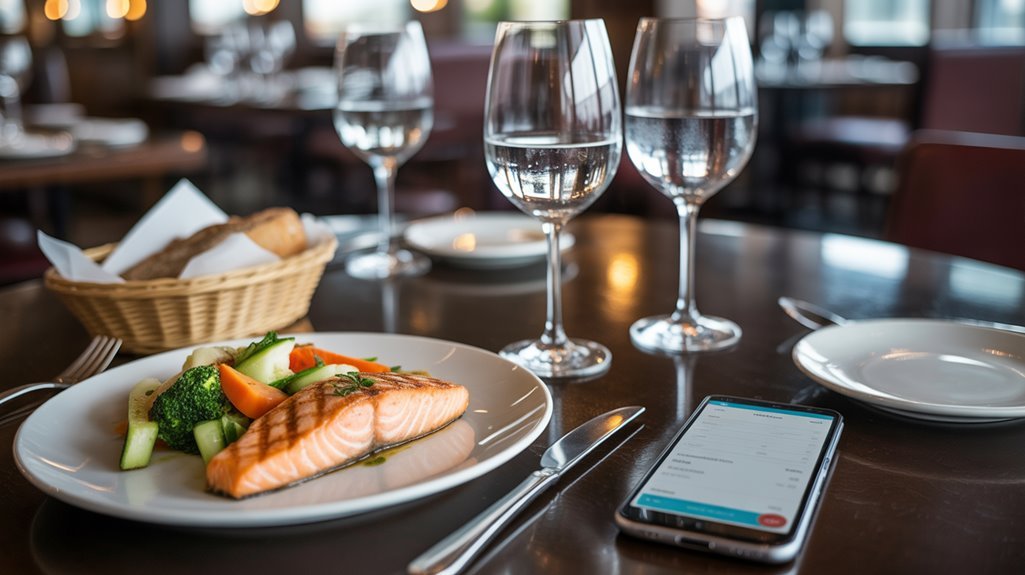
You don’t have to abandon your meal planning goals when eating out or attending social gatherings. Research shows that people who review restaurant menus online beforehand make healthier choices and consume 23% fewer calories than those who order spontaneously. At parties, you’ll maintain better portion control by eating a protein-rich snack before arriving and positioning yourself away from the buffet table during conversations.
Restaurant Menu Navigation
How often have you opened a restaurant menu only to feel overwhelmed by the choices and uncertain about which options align with your nutritional goals? Menu item selection becomes simpler when you’re equipped with evidence-based strategies. Before dining, review the restaurant’s menu online to identify dietary preference options that match your nutritional requirements. Look for grilled, baked, or steamed preparations rather than fried alternatives.
Key navigation strategies include:
- Request modifications like dressing on the side or vegetable substitutions
- Choose protein-rich entrees with non-starchy vegetables
- Ask about portion sizes and consider sharing or boxing half
Research indicates that individuals who plan their restaurant choices consume 23% fewer calories than spontaneous orderers. You’ll maintain your nutritional targets while enjoying social dining experiences.
Party Food Strategies
Social gatherings present unique challenges beyond restaurant dining, particularly when you’re faced with buffet-style setups and limited healthy options. You’ll benefit from strategic approaches to navigate these events successfully.
Before attending, consume protein-rich snacks to curb appetite. Focus on vegetable-based finger foods and pair them with healthy dips like hummus or Greek yogurt-based options. Position yourself away from food tables to minimize mindless grazing.
| Strategy | Action | Benefit |
|---|---|---|
| Pre-party fuel | Eat balanced meal beforehand | Reduces overeating by 40% |
| Smart selections | Choose raw vegetables, lean proteins | Saves 300-500 calories |
| Portion control | Use small plates, single servings | Decreases consumption by 25% |
Stay hydrated with water between alcoholic beverages. Research shows alternating drinks reduces caloric intake by 30% while maintaining social engagement throughout the event.
Meal Prep Storage Solutions: Keeping Food Fresh and Organized
When you’ve invested time in meal prepping, proper storage becomes essential for maintaining food safety and nutritional quality throughout the week. Using airtight containers prevents moisture loss and bacterial contamination, extending shelf life by 40-50% compared to standard storage methods. Glass containers work best for reheating without chemical leaching.
Effective storage strategies include:
- Label containers with prep dates and consume within 4-5 days
- Store proteins separately from grains to prevent texture degradation
- Keep cut vegetables in water to maintain crispness
Vacuum sealing removes oxygen that accelerates spoilage, making it ideal for batch-cooked proteins. Research shows vacuum-sealed chicken maintains quality for up to 14 days refrigerated. Organize your refrigerator with oldest meals in front, ensuring proper rotation and minimizing food waste.
Breaking Through Plateaus: Adjusting Your Meal Plan for Continued Progress
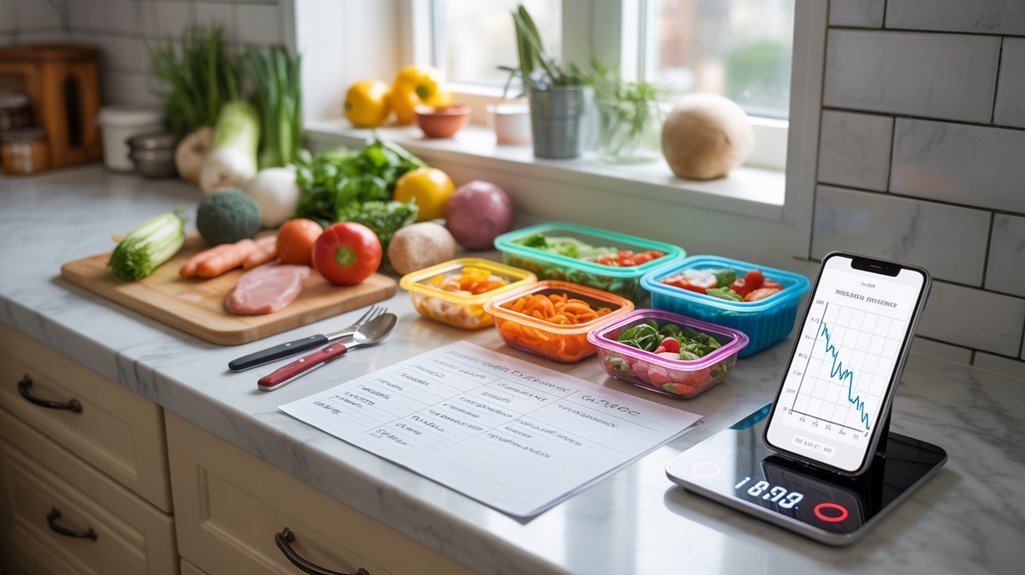
Even with perfectly stored meals ready to go, you’ll eventually hit a point where your results stall in spite of following your plan consistently. When progress plateaus, it’s time to shake things up. Research shows that metabolic adaptation occurs after 8-12 weeks of consistent caloric restriction, making adjustments essential.
Start by increasing meal variety to prevent nutrient gaps and boost adherence. Rotate between different protein sources weekly and experiment with seasonal produce. Strategic ingredient swaps can reignite progress – replace white rice with cauliflower rice to cut calories, or swap regular pasta for protein-enriched alternatives to increase satiety.
Track your macros closely and adjust portions by 10-15% every two weeks. Small, systematic changes prevent dramatic shifts that could backfire while keeping your metabolism responsive.
Frequently Asked Questions
How Do I Handle Food Cravings While Following a Meal Plan?
You’ll manage cravings better by identifying triggers and planning healthy substitutions. Keep nutrient-dense snacks ready, stay hydrated, and guarantee you’re eating enough protein and fiber. Practice mindful eating techniques to distinguish true hunger from emotional cravings.
Can I Meal Plan if I Have Multiple Food Allergies?
You can successfully meal plan with allergies. Use meal prep strategies focusing on safe ingredients. Research allergy-friendly recipes, create dedicated shopping lists, and batch-cook approved meals. Label everything clearly and maintain separate prep areas when necessary.
What Should I Do When Family Members Won’t Eat Planned Meals?
When family members resist planned meals, you’ll succeed by involving them in menu selection and offering flexible meal substitutions. Research shows collaborative planning increases acceptance rates while maintaining nutritional goals through customizable protein and vegetable options.
How Long Can I Follow the Same Meal Plan Rotation?
You can maintain a meal plan duration of 2-4 weeks before rotating, as research shows meal variety importance for preventing nutrient gaps and diet fatigue. You’ll need periodic changes to guarantee balanced nutrition and adherence.
Is It Safe to Meal Plan While Pregnant or Breastfeeding?
You can safely meal plan during pregnancy and breastfeeding, but you’ll need to adjust for increased nutritional needs. Focus on safe foods, avoid high-mercury fish, unpasteurized products, and guarantee adequate calories, protein, folate, and iron.
Conclusion
You’ve now got the essential tools to transform your eating habits through strategic meal planning. By starting small, mastering portion control, and applying smart prep strategies, you’re setting yourself up for sustainable weight loss success. Remember, consistency beats perfection—adjust your approach as needed and stay flexible when life throws curveballs. Your journey to leaner living isn’t about restriction; it’s about creating a balanced, organized system that works with your lifestyle, not against it.