



You can slash calories by 50-75% in your favorite dishes without sacrificing taste. Replace pasta with zucchini noodles, swap heavy cream for Greek yogurt, and use cauliflower rice instead of regular rice. Create decadent chocolate desserts under 150 calories using avocado mousse or black bean brownies. International cuisine recipes keep you satisfied under 400 calories per serving. These evidence-based substitutions preserve authentic flavors while accelerating fat loss through strategic nutrient density.
Key Takeaways
- Transform comfort foods like pasta and desserts using ingredient swaps that cut calories by 50-80% while maintaining satisfying flavors and textures.
- Create decadent chocolate desserts under 150 calories using avocado mousse, black bean brownies, or protein truffles with natural sweeteners.
- Prepare international cuisine dishes under 400 calories featuring Mediterranean quinoa bowls, Thai stir-fries, and Mexican lettuce wraps.
- Build high-volume meals under 200 calories using cauliflower rice, zucchini noodles, and shirataki pasta for maximum satiety.
- Prioritize protein-rich meals delivering 30+ grams for under 300 calories to preserve muscle while creating fat loss deficits.
Creamy Pasta Dishes Under 300 Calories That Taste Like Restaurant Favorites
When you’re craving rich, creamy pasta but watching your calorie intake, you don’t need to sacrifice flavor for your health goals. Replace traditional pasta with zucchini noodles to slash calories by 85% while maintaining satisfying texture. Create indulgent sauces using cauliflower cream instead of heavy dairy—simply blend steamed cauliflower with garlic, nutritional yeast, and low-sodium broth for a velvety base containing just 25 calories per half-cup.
You’ll achieve restaurant-quality results by incorporating umami-rich ingredients like sun-dried tomatoes, fresh herbs, and lemon zest. These additions enhance flavor complexity without adding considerable calories. A typical serving combines two cups of zucchini noodles (40 calories) with cauliflower cream sauce (50 calories) and vegetables (30 calories), totaling under 300 calories while delivering essential vitamins, minerals, and fiber.
Decadent Chocolate Desserts With Fewer Calories Than Fresh Fruit
You can satisfy your chocolate cravings while maintaining a caloric deficit with these nutrient-dense desserts that clock in under 100 calories per serving. Dark chocolate avocado mousse provides heart-healthy monounsaturated fats and antioxidants, black bean brownies deliver 4 grams of fiber and plant-based protein per square, and cocoa protein truffles offer 8 grams of whey protein in each bite-sized portion. These recipes leverage natural sweeteners and protein-rich ingredients to create desserts with better macronutrient profiles than many whole fruits, which can contain 15-20 grams of sugar per serving.
Dark Chocolate Avocado Mousse
While traditional chocolate desserts can derail fat loss efforts with their high sugar and calorie content, dark chocolate avocado mousse offers a revolutionary alternative that delivers rich, indulgent flavor for just 120-150 calories per serving. You’ll harness avocado benefits including heart-healthy monounsaturated fats and fiber that promote satiety. This nutrient-dense dessert alternative requires only five ingredients and ten minutes of preparation.
| Ingredient | Amount | Calories |
|---|---|---|
| Ripe avocado | 1/2 medium | 80 |
| Cocoa powder | 2 tbsp | 20 |
| Maple syrup | 1 tbsp | 52 |
| Vanilla extract | 1/2 tsp | 6 |
You’ll blend ingredients until silky smooth, creating a mousse that’s naturally creamy without dairy. The combination provides 3g fiber, 5g healthy fats, and powerful antioxidants from cocoa polyphenols, supporting both fat loss and cardiovascular health.
Black Bean Brownies
Black bean brownies represent the ultimate fusion of nutrition and indulgence, containing just 90-110 calories per serving—fewer than a medium apple—while delivering 3g protein and 4g fiber. You’ll harness black bean benefits including resistant starch, which promotes satiety and supports healthy blood sugar levels. The beans’ natural creaminess replaces butter while adding iron, folate, and magnesium.
These brownie alternatives achieve their fudgy texture through pureed beans combined with cocoa powder, eggs, and minimal sweetener. You’re fundamentally eating a protein-rich legume disguised as dessert. The fiber content slows sugar absorption, preventing the blood glucose spikes typical of traditional brownies. By swapping refined flour for nutrient-dense beans, you’ll consume 65% fewer calories while increasing your intake of essential minerals and antioxidants from cocoa.
Cocoa Protein Truffles
Cocoa protein truffles deliver rich chocolate satisfaction at just 35-45 calories per piece—less than half the calories in a medium strawberry—while packing 4g protein per truffle. You’ll harness cocoa benefits including flavonoids that boost metabolism and reduce inflammation. The antioxidants in raw cacao powder support fat oxidation during exercise while satisfying chocolate cravings naturally.
Create endless truffle variations using your favorite protein powder flavors. Mix vanilla protein with almond extract, chocolate protein with peppermint oil, or unflavored protein with matcha powder. You’ll need just four base ingredients: protein powder, unsweetened cocoa, almond milk, and stevia. Roll the mixture into balls and dust with additional cocoa or crushed nuts. Store them in your freezer for grab-and-go treats that won’t derail your fat loss goals.
Comfort Food Makeovers That Slash Calories Without Sacrificing Satisfaction
You don’t have to abandon your favorite comfort foods to achieve fat loss – strategic ingredient swaps can reduce calories by up to 50% while maintaining the textures and flavors you crave. By replacing traditional pasta with spiralized vegetables or shirataki noodles, switching from deep-fried breading to oven-baked panko or crushed nuts, and using Greek yogurt or pureed fruits in desserts instead of heavy cream, you’ll create satisfying meals that support your goals. These evidence-based modifications preserve the psychological satisfaction of comfort eating while considerably improving the nutritional profile of each dish.
Creamy Pasta Alternatives
When you’re craving a bowl of creamy pasta but want to stay on track with your fat loss goals, smart ingredient swaps can reduce calories by up to 70% while maintaining the rich, satisfying texture you love. Replace traditional pasta with zucchini noodles or cauliflower pasta to slash carbohydrates from 43g to just 4-7g per serving. You’ll boost fiber intake while cutting 150-200 calories per bowl.
Create indulgent sauces using Greek yogurt, cashew cream, or pureed white beans instead of heavy cream. These protein-rich alternatives deliver the same velvety consistency with added nutrients. One tablespoon of nutritional yeast adds umami depth and B-vitamins without excess calories. You’re getting restaurant-quality flavor profiles that support your metabolism while keeping portions generous and satisfying.
Crispy Coating Swaps
Transform your favorite breaded and fried foods into crispy, golden delights that contain 60-80% fewer calories by mastering smart coating techniques. You’ll achieve the same satisfying crunch without deep-frying by using crushed almonds, pecans, or pistachios as nut coatings instead of traditional breadcrumbs. These protein-rich alternatives provide essential fatty acids while reducing refined carbohydrate intake.
Create perfectly crispy baked alternatives by combining finely ground nuts with herbs and spices, then adhering them to proteins using Greek yogurt or beaten egg whites. Bake at 425°F on a wire rack to guarantee even air circulation. This method delivers restaurant-quality texture while preserving nutrients typically destroyed during high-temperature frying. You’re not just cutting calories—you’re adding fiber, vitamins, and minerals that support sustained energy and satiety.
Decadent Dessert Hacks
Satisfying your sweet tooth doesn’t have to derail your fat loss goals when you apply strategic ingredient substitutions that maintain the rich textures and flavors you crave. You’ll transform calorie-dense desserts into guilt free indulgence options by replacing butter with Greek yogurt or mashed avocado, cutting fat content by 75% while preserving moisture. Swap refined sugar for natural alternatives like stevia or monk fruit extract, reducing caloric density without compromising sweetness intensity.
Your dessert substitutions should focus on nutrient density. Replace all-purpose flour with almond or coconut flour to boost protein and fiber content. Black beans work remarkably well in brownies, adding 3 grams of fiber per serving while creating fudgy texture. These evidence-based modifications slash calories by 40-60% while improving satiety through increased protein and fiber.
International Cuisine Recipes That Keep You Under 400 Calories Per Serving
While international cuisines often feature rich, calorie-dense dishes, you can enjoy authentic flavors from around the globe without exceeding 400 calories per serving. You’ll discover that nutrient-dense ingredients and traditional cooking methods create satisfying meals that support your fat loss goals.
Authentic global flavors meet your fat loss goals with nutrient-dense ingredients under 400 calories per serving.
Transform your meal planning with these evidence-based international options:
• Mediterranean quinoa bowls with grilled vegetables, herbs, and feta (380 calories)
- Thai vegetable stir fry with tofu and basil in light coconut sauce (350 calories)
- Japanese miso soup with edamame and shiitake mushrooms (290 calories)
- Mexican black bean lettuce wraps with pico de gallo (320 calories)
- Cauliflower rice stir-fry – 4 cups with vegetables provides 180 calories
- Zucchini noodle soup – 3-cup serving contains 145 calories
- Shirataki pad thai – Full plate offers 195 calories
- Cucumber Greek salad – 2-cup portion delivers 170 calories
These recipes maximize protein and fiber content while minimizing empty calories. You’re getting authentic taste profiles through strategic use of spices, herbs, and umami-rich ingredients rather than excessive fats or sugars.
Smart Ingredient Swaps That Cut Calories By 50% or More
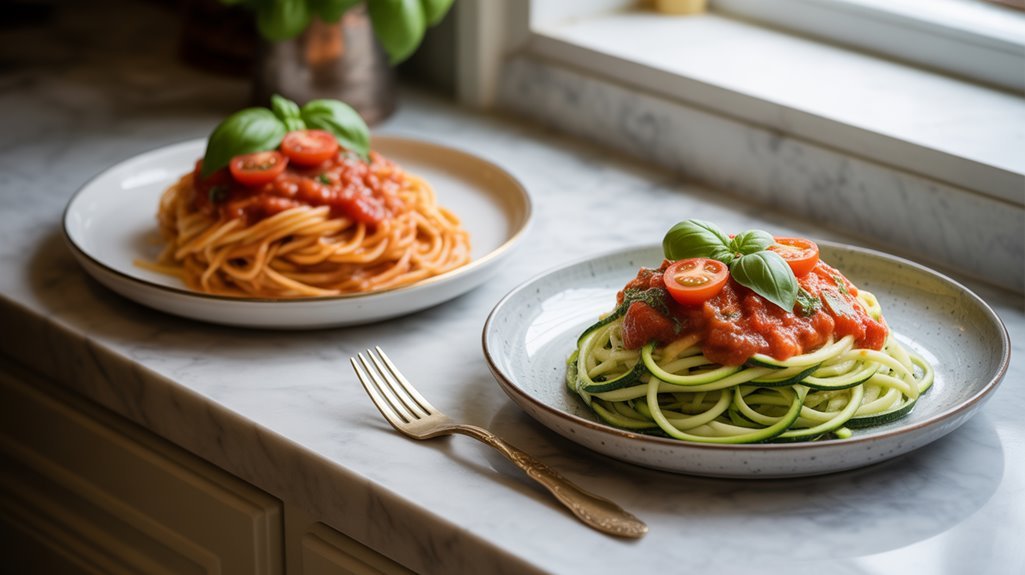
Making strategic ingredient substitutions can dramatically reduce your caloric intake without sacrificing flavor or satiety. You’ll slash calories by replacing full-fat dairy with Greek yogurt in creamy sauces, cutting 75% of calories while boosting protein. Swap regular pasta for zucchini noodles or shirataki noodles to eliminate 80-95% of carbohydrate calories.
Transform your calorie conscious cooking by using cauliflower rice instead of white rice, saving 85% of calories per cup. Replace butter with unsweetened applesauce in baking to cut 94% of fat calories. You can substitute ground turkey breast for beef in recipes, reducing calories by 50% while maintaining 26 grams of protein per serving. These ingredient substitutions preserve meal satisfaction through volume and nutrient density while creating substantial caloric deficits necessary for fat loss.
Volume-Eating Recipes That Fill You Up on Less Than 200 Calories
When you’re cutting calories for fat loss, you’ll need recipes that maximize food volume while minimizing energy density to prevent hunger-driven overeating. Volume eating leverages bulk ingredients high in water and fiber content, naturally promoting portion control through satiety rather than restriction.
These evidence-based combinations deliver maximum satisfaction under 200 calories:
Each recipe incorporates non-starchy vegetables as primary bulk ingredients, ensuring you consume adequate micronutrients while maintaining a caloric deficit. The high water and fiber content triggers stretch receptors in your stomach, signaling fullness in spite of minimal energy intake.
High-Protein, Low-Calorie Meals That Accelerate Fat Loss
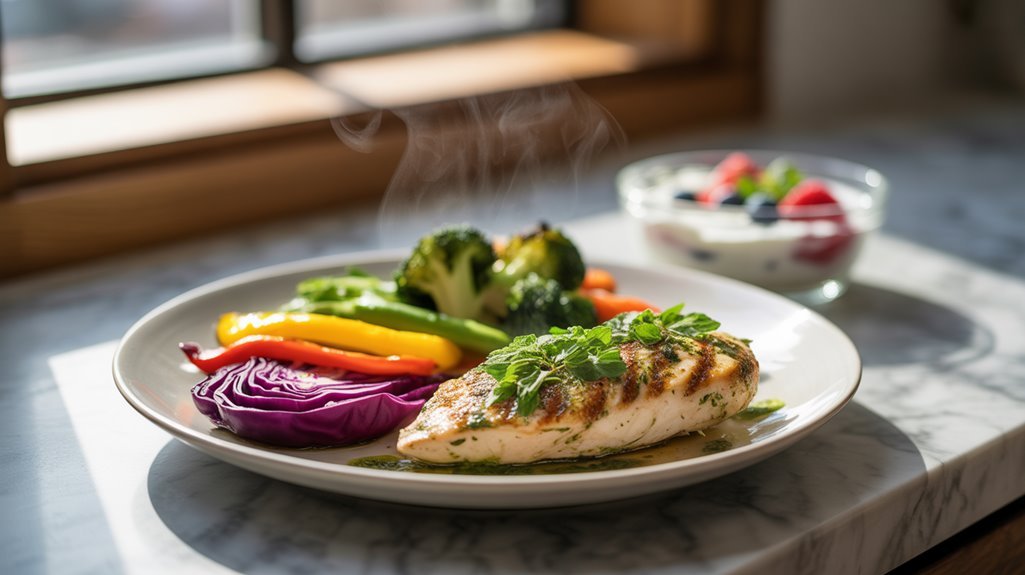
If you’re serious about accelerating fat loss, you’ll need to prioritize protein intake while maintaining a caloric deficit—a strategy that preserves lean muscle mass during weight reduction. Research shows consuming 0.8-1 gram of protein per pound of body weight optimizes fat loss while protecting metabolic rate.
Smart meal prep transforms this science into practice. You’ll batch-cook lean proteins like grilled chicken breast, white fish, and egg whites on weekends. Combine these with non-starchy vegetables for meals under 300 calories delivering 30+ grams of protein.
Between meals, strategic high protein snacks prevent muscle breakdown. Greek yogurt parfaits, cottage cheese bowls, and protein powder smoothies keep you satisfied while supporting recovery. These options provide 15-25 grams of protein for 150 calories or less.
Frequently Asked Questions
How Long Can I Store These Low-Calorie Meals in the Refrigerator?
You’ll want to follow proper meal storage guidelines for safety. Most cooked meals stay fresh 3-4 days when stored correctly. Use airtight containers, cool quickly, and follow refrigerator tips like maintaining 40°F or below.
Will These Recipes Work for People With Diabetes or Prediabetes?
You’ll find these recipes helpful for diabetes management since they’re low-calorie and support blood sugar control. For ideal meal planning, focus on recipes with high fiber, lean proteins, and minimal added sugars that stabilize glucose levels.
Can Children Safely Eat These Low-Calorie Recipes?
You’ll need to modify low-calorie recipes for children since they require higher energy density for growth. Focus on nutritional balance while considering child preferences – add healthy fats, whole grains, and protein portions appropriate for their developmental needs.
How Much Weight Can I Expect to Lose Using These Recipes?
Your expected results depend on multiple factors including calorie deficit, metabolism, and activity level. For sustainable weight management, you’ll typically lose 1-2 pounds weekly when combining nutrient-dense meals with consistent exercise and adequate hydration.
Do I Need Special Kitchen Equipment to Make These Dishes?
You don’t need specialized kitchen equipment for most cooking techniques. Basic kitchen essentials like a knife, cutting board, pan, and pot will suffice. These fundamental tools enable you to prepare nutrient-dense meals using simple methods.
Conclusion
You’ve discovered that losing fat doesn’t mean sacrificing flavor or satisfaction. These evidence-based recipes prove you can enjoy restaurant-quality meals while maintaining a caloric deficit. By incorporating smart ingredient swaps, volume-eating strategies, and protein-rich options, you’ll create sustainable eating habits that support your fat loss goals. Remember, successful weight management isn’t about deprivation—it’s about making nutrient-dense choices that keep you satisfied while naturally reducing calorie intake.