


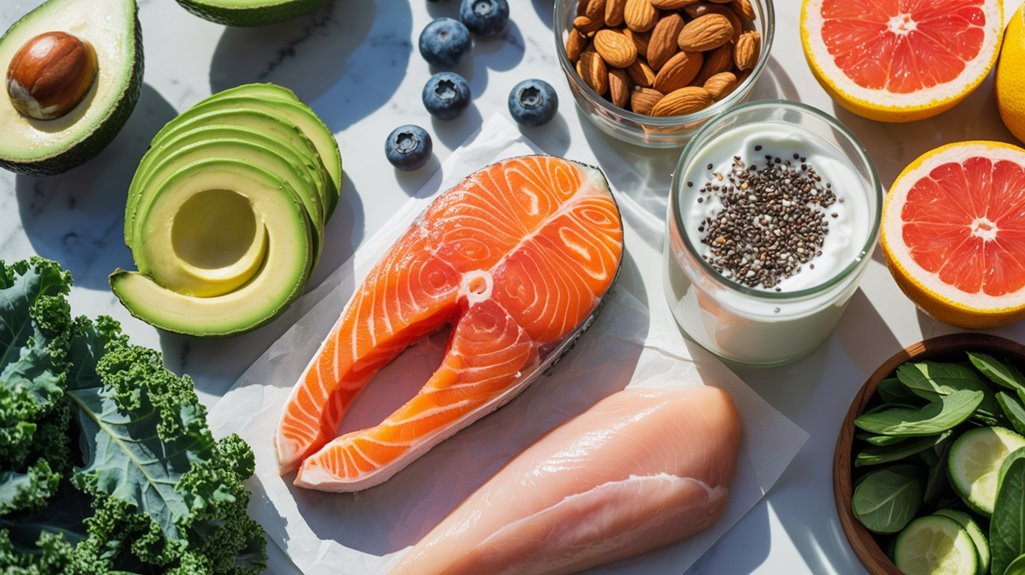
You’ll maximize fat loss by eating lean proteins like chicken and fish that burn 20-30% more calories during digestion, fiber-rich vegetables that reduce hunger hormones, and whole grains like quinoa that boost metabolism. Add healthy fats from avocados and nuts to optimize leptin function, plus thermogenic spices like chili peppers that increase metabolic rate by up to 15%. These nutrient-dense foods work together to accelerate fat burning while preserving muscle mass and controlling appetite.
Key Takeaways
- Lean proteins like chicken breast, fish, and Greek yogurt boost metabolism by 20-30% through thermogenesis while preserving muscle mass.
- High-fiber vegetables and whole grains like quinoa and steel-cut oats increase satiety hormones and reduce hunger for 3-4 hours.
- Healthy fats from avocados, almonds, and walnuts optimize leptin function and signal the body to mobilize stored fat.
- Thermogenic spices including capsaicin, ginger, and black pepper can increase metabolic rate by 5-15% for several hours.
- Nutrient-dense foods rich in vitamin C and polyphenols enhance mitochondrial function and support fatty acid transport for energy production.
Lean Proteins That Accelerate Fat Burning
When you’re trying to shed body fat, lean proteins become your metabolic ally by increasing thermogenesis and preserving muscle mass during caloric restriction. Your body expends 20-30% more energy digesting protein compared to carbohydrates or fats, effectively boosting your metabolic rate.
Optimal protein sources include chicken breast, turkey, fish, egg whites, and Greek yogurt. These foods deliver essential amino acids that support muscle protein synthesis while you’re in a caloric deficit. Research indicates consuming 0.8-1.2 grams of protein per pound of body weight helps maintain lean tissue during fat loss phases.
You’ll maximize fat-burning potential by distributing protein intake across 4-5 meals daily, ensuring consistent amino acid availability. This approach prevents muscle catabolism and sustains metabolic function throughout your weight loss journey.
High-Fiber Vegetables for Sustained Satiety
While protein builds your metabolic foundation, high-fiber vegetables create the volume and satiety you’ll need for sustainable fat loss. You’ll find that vegetables containing 5+ grams of fiber per serving—like artichokes, brussels sprouts, and split peas—significantly reduce hunger hormones and slow gastric emptying.
Incorporate these powerhouses through strategic vegetable meal prepping: roast batches of broccoli, cauliflower, and carrots on Sundays. You’re creating ready-to-eat options that prevent impulsive food choices. Studies show people consuming 25-35g of fiber daily lose 5-10% more body fat than low-fiber dieters.
Try fiber rich recipes combining multiple vegetables: stir-fries with bok choy and snap peas, or soups featuring kale and white beans. You’ll activate stretch receptors in your stomach, triggering fullness signals while consuming minimal calories.
Metabolism-Boosting Whole Grains
In spite of common misconceptions about carbohydrates and fat loss, research demonstrates that whole grains actually improve metabolic function through their thermic effect and resistant starch content. You’ll maximize whole grain benefits by choosing minimally processed options that retain their bran and germ layers.
These three grains deliver superior metabolic support:
- Steel-cut oats – Contains beta-glucan fiber that increases peptide YY production, boosting satiety for 3-4 hours post-consumption
- Quinoa – Provides complete protein (8g per cup) plus 5g fiber content, requiring 20-30% more energy to digest than refined grains
- Brown rice – Supplies resistant starch that feeds beneficial gut bacteria, improving insulin sensitivity by up to 33%
You’re fundamentally programming your metabolism for efficiency when incorporating these whole grains strategically into meals.
Healthy Fats That Support Weight Loss
Beyond whole grains’ metabolic benefits, incorporating particular dietary fats accelerates fat loss through hormonal optimization and improved cellular function. You’ll find monounsaturated fats in avocados promote satiety while reducing visceral adiposity. Avocado benefits extend to improved insulin sensitivity and increased adiponectin production, directly supporting metabolic efficiency.
Different nut varieties offer unique fat-burning advantages. Almonds provide alpha-linolenic acid, boosting thermogenesis, while walnuts’ omega-3 content reduces inflammatory markers that inhibit lipolysis. You’re getting approximately 14-19 grams of fat per ounce, primarily from oleic and linoleic acids.
These fats don’t just replace harmful trans fats—they actively signal your body to mobilize stored adipose tissue. Research demonstrates consuming 30-35% of daily calories from healthy fats optimizes leptin function and maintains stable ghrelin levels throughout your fat-loss journey.
Thermogenic Foods and Spices
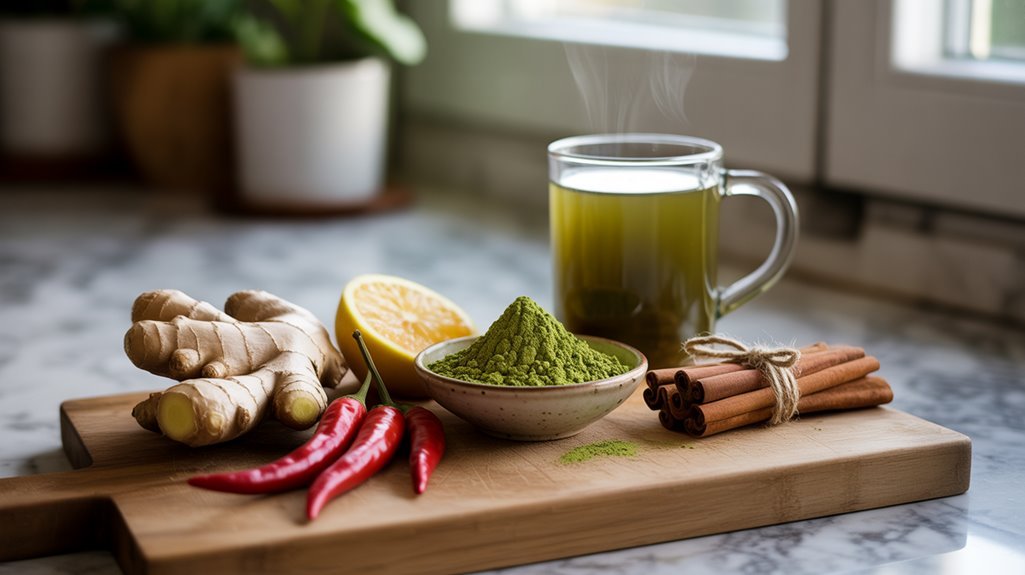
You can boost your metabolism through thermogenesis, a process where your body generates heat and burns extra calories to digest certain foods. This metabolic effect occurs because proteins and particular compounds in spices require more energy to process than simple carbohydrates or fats. Research shows that capsaicin in chili peppers, gingerol in ginger, and piperine in black pepper can increase your metabolic rate by 5-15% for several hours after consumption.
How Thermogenesis Works
When you consume certain foods and spices, they can trigger a metabolic process called thermogenesis—your body’s way of producing heat by burning calories. This thermogenesis process increases your metabolic rate, requiring extra energy expenditure even at rest.
Here’s how it works:
- Cellular activation – Distinct compounds in thermogenic foods stimulate brown adipose tissue, which burns calories to generate heat
- Sympathetic response – Your nervous system releases norepinephrine, signaling fat cells to break down stored energy
- Mitochondrial boost – These foods enhance mitochondrial function, where actual calorie burning occurs
Research indicates that thermogenic foods can increase energy expenditure by 5-10% for several hours post-consumption. While this won’t replace exercise, it’s a measurable metabolic advantage that compounds over time.
Top Fat-Burning Spices
Several spices demonstrate considerable thermogenic properties that can enhance your body’s fat-burning capacity through particular bioactive compounds. Cayenne pepper’s capsaicin increases metabolic rate by 5-15% for several hours post-consumption. Ginger contains gingerol and shogaol, which stimulate brown adipose tissue activation and lipid oxidation.
You’ll maximize thermogenic effects by creating synergistic spice blends. Combine turmeric with black pepper—piperine enhances curcumin absorption by 2,000%. Cinnamon regulates blood glucose and improves insulin sensitivity, reducing fat storage. Your cooking techniques matter: dry-roasting whole spices before grinding releases volatile oils and intensifies bioavailability. Add thermogenic spices during final cooking stages to preserve heat-sensitive compounds. Daily incorporation of these spices through various preparation methods can contribute to sustained metabolic enhancement and improved fat oxidation rates.
Low-Calorie Fruits That Satisfy Sweet Cravings
While refined sugars contribute to fat storage and metabolic dysfunction, naturally occurring fructose in whole fruits provides sweetness alongside fiber, vitamins, and phytonutrients that support fat loss. You’ll find these low-calorie options particularly effective for managing cravings:
- Berries (40-85 calories/cup): Strawberries, blueberries, and raspberries contain anthocyanins that enhance insulin sensitivity. Blend them into berry smoothies for concentrated polyphenol intake.
- Watermelon (46 calories/cup): Its high water content (92%) promotes satiety while L-citrulline supports nitric oxide production and fat oxidation.
- Papaya (62 calories/cup): Perfect for tropical fruit salads, papaya’s papain enzyme aids protein digestion and reduces bloating.
You’re getting maximum sweetness with minimal caloric impact when choosing these fruits. Their fiber slows fructose absorption, preventing insulin spikes that trigger fat storage.
Hydrating Foods That Aid Fat Loss
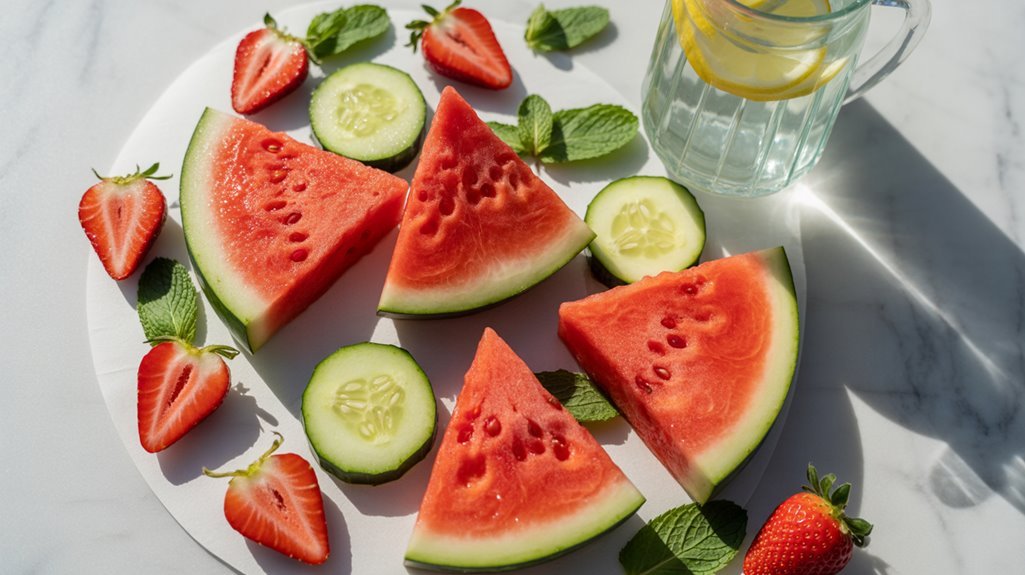
Your body’s fat-burning efficiency depends heavily on proper hydration, yet most people overlook water-rich foods as metabolic tools. These foods support thermogenesis and optimize cellular metabolism while naturally reducing caloric density.
You’ll maximize fat oxidation by incorporating cucumbers (96% water), watermelon (92% water), and zucchini (95% water) as water-rich snacks. These foods provide essential electrolytes and fiber that regulate appetite hormones. Studies show adequate hydration increases lipolysis by 10-30%.
Create nutrient dense smoothies using spinach, celery, and berries—combining hydration with polyphenols that enhance mitochondrial function. You’re fundamentally flooding cells with water while delivering fat-burning compounds. Bell peppers, tomatoes, and citrus fruits offer similar benefits, providing vitamin C for carnitine synthesis, which transports fatty acids into mitochondria for energy production.
Frequently Asked Questions
How Many Meals Should I Eat per Day for Fat Loss?
Research shows meal frequency doesn’t greatly impact fat loss when calories’re controlled. You’ll succeed with 3-6 meals daily, focusing on ideal timing around workouts and sleep. Choose what’s sustainable for your lifestyle and adherence.
Can I Lose Fat While Eating at Restaurants?
You can lose fat while making smart restaurant choices. Select grilled proteins, vegetables, and salads. Request modifications like dressing on the side. Most restaurants offer healthy options—just avoid fried foods and oversized portions.
Should I Take Supplements Alongside These Foods?
You don’t necessarily need supplements for fat loss. Nevertheless, certain supplement types like protein powder or omega-3s can help. Consider nutrient timing – taking protein post-workout or vitamins with meals enhances absorption and effectiveness.
How Long Before I See Results From Eating These Foods?
You’ll typically notice changes within 2-4 weeks, though individual variations affect your timeframe expectations. Body composition improvements depend on genetics, adherence, caloric deficit, and metabolic factors. Sustainable results require consistent dietary patterns over months.
Do I Need to Count Calories When Eating Fat-Loss Foods?
You’ll need calorie tracking since fat loss requires a deficit. While nutrient-dense foods help, portion control matters—you can overconsume anything. Research shows successful weight loss typically combines quality food choices with monitoring overall energy intake.
Conclusion
You’ve learned that fat loss isn’t about restriction—it’s about strategic food choices. By incorporating lean proteins, fiber-rich vegetables, whole grains, and healthy fats, you’ll enhance your metabolic rate while maintaining satiety. Don’t forget thermogenic spices and hydrating foods that improve your body’s natural fat-burning processes. Remember, sustainable fat loss occurs when you’re consuming nutrient-dense foods that support hormonal balance and energy expenditure. Focus on whole foods rather than processed alternatives for best results.