


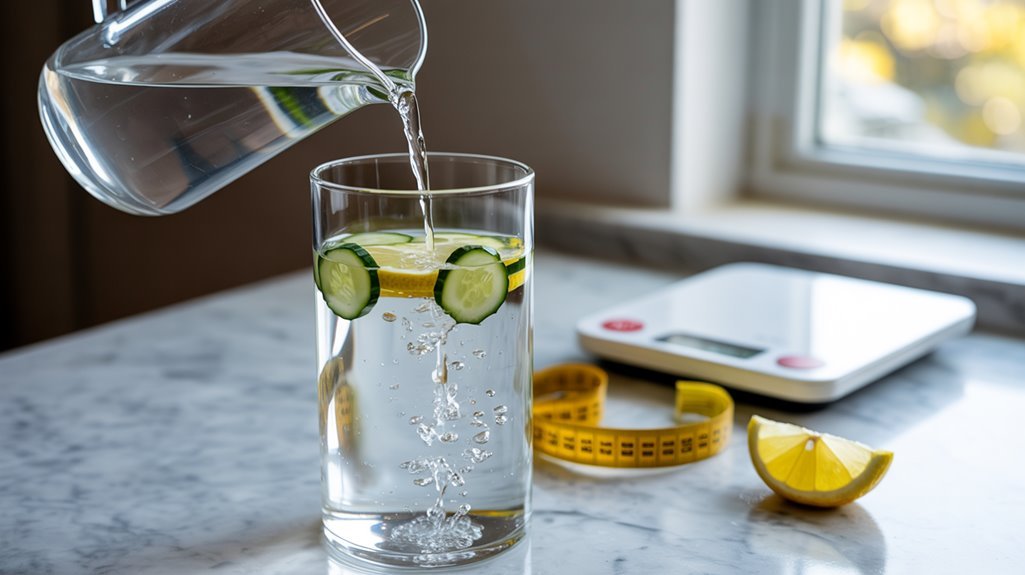
Your hydration status directly impacts fat metabolism, with proper water intake boosting metabolic rate by up to 30% within minutes. When you’re dehydrated, fat cells can’t efficiently release fatty acids for energy, and your liver’s fat-processing capacity drops by 40%. You’ll need 30-35ml per kilogram of body weight daily, consuming 500ml before meals to enhance fat oxidation. Understanding ideal timing and temperature strategies maximizes these metabolic benefits.
Key Takeaways
- Drinking 500ml of water increases metabolic rate by up to 30% within 10 minutes, enhancing calorie burning.
- Dehydration reduces hormone-sensitive lipase activity by 40%, significantly impairing the body’s ability to break down stored fat.
- Proper hydration enables the liver to metabolize fat efficiently; mild dehydration decreases hepatic fat metabolism by 40%.
- Water consumption 30 minutes before meals enhances fat oxidation and reduces caloric intake by 13%.
- Even mild dehydration (1-2% body weight loss) slows fat loss despite maintaining a caloric deficit.
The Science Behind Water and Metabolism
When you drink water, your body’s metabolic rate increases by up to 30% within 10 minutes, according to research published in the Journal of Clinical Endocrinology and Metabolism. This thermogenic effect occurs as your body expends energy warming the water to body temperature. You’ll maximize water absorption by drinking room-temperature water on an empty stomach, allowing rapid gastric emptying and intestinal uptake.
Your hydration timing matters greatly. You’ll enhance metabolic benefits by consuming 500ml of water 30 minutes before meals, which studies show can increase fat oxidation. During cellular hydration, water molecules aid ATP production and lipolysis—the breakdown of stored triglycerides. Without adequate hydration, you’ll experience decreased mitochondrial efficiency and impaired fatty acid mobilization, reducing your body’s ability to make use of fat stores for energy.
How Dehydration Slows Fat Burning
When you’re dehydrated, your metabolic rate can drop by up to 3%, directly hampering your body’s ability to burn calories and mobilize fat stores. Your fat cells require adequate hydration to release fatty acids efficiently, and without sufficient water, this lipolysis process becomes compromised. Moreover, dehydration forces your liver to compensate for your kidneys’ reduced function, diverting it from its primary role in metabolizing stored fat into usable energy.
Metabolic Rate Decline
Even mild dehydration of just 1-2% body weight loss markedly impairs your metabolic rate, reducing your body’s ability to burn fat efficiently. When you’re dehydrated, your cells can’t produce energy effectively, triggering a metabolic slowdown that persists until proper hydration’s restored. Your liver compensates for kidney dysfunction during dehydration, diverting its attention from fat metabolism.
Despite hydration misconceptions suggesting water intake directly burns fat, the mechanism’s indirect but notable. Dehydration decreases blood volume, forcing your cardiovascular system to work harder while delivering less oxygen to tissues. This reduces mitochondrial efficiency—your cellular powerhouses responsible for fat oxidation. Studies demonstrate that chronically dehydrated individuals experience up to 3% reduction in resting metabolic rate, translating to approximately 45-90 fewer calories burned daily.
Fat Cell Function
Although your fat cells require adequate hydration to release stored triglycerides, dehydration severely compromises this lipolysis process. When you’re dehydrated, your adipocytes can’t efficiently break down fat storage for energy utilization. This impairment affects both white and brown fat cell types differently—white adipocytes struggle to mobilize lipids, while brown adipocytes experience reduced thermogenic capacity.
Your body’s hormone-sensitive lipase, the enzyme responsible for breaking down stored fat, requires water to function at its best. Without sufficient hydration, this enzyme’s activity decreases by up to 40%, directly inhibiting fat metabolism. In addition, dehydration increases cortisol production, which promotes abdominal fat storage and disrupts normal adipocyte signaling. You’ll notice slower fat loss in spite of maintaining caloric deficit when cellular hydration drops below ideal levels.
Liver Processing Impairment
The liver’s ability to metabolize fat depends heavily on proper hydration status, yet dehydration forces this organ to compensate for kidney dysfunction. When you’re dehydrated, your kidneys can’t efficiently filter toxins, requiring your liver to assume this extra workload. This dual burden considerably reduces the liver’s capacity for fat oxidation – its primary metabolic function for converting stored lipids into usable energy.
Your liver health directly correlates with maintaining ideal hydration balance. Even mild dehydration (2-3% body water loss) can decrease hepatic fat metabolism by up to 40%. You’ll experience slower lipolysis rates as hepatocytes prioritize detoxification over fat breakdown. Furthermore, dehydration impairs bile production, further compromising lipid digestion and absorption. By maintaining adequate fluid intake, you’re ensuring your liver operates efficiently for maximum fat-burning potential.
Water’s Impact on Liver Function and Fat Processing
Your liver requires adequate hydration to efficiently metabolize stored fat and process toxins that can interfere with weight loss. When you’re properly hydrated, your liver can focus on converting fatty acids into usable energy rather than compensating for your kidneys’ reduced function during dehydration. Studies show that even mild dehydration decreases hepatic lipid oxidation by up to 30%, directly impairing your body’s ability to break down fat stores.
Liver Detoxification Processes
When you’re properly hydrated, your liver can efficiently process fats and filter toxins from your bloodstream, but inadequate water intake forces this vital organ to compensate for your kidneys’ reduced function. Your liver’s phase I and phase II detoxification pathways require adequate hydration to convert fat-soluble toxins into water-soluble compounds for elimination. Without sufficient water, these metabolic processes slow considerably, impeding fat oxidation and toxin clearance.
While trendy detox beverages promise enhanced liver health, plain water remains the most effective support for hepatic function. You’ll optimize your liver’s fat-metabolizing capacity by maintaining consistent hydration rather than relying on expensive supplements. Research demonstrates that even mild dehydration reduces glutathione production—your liver’s primary antioxidant—by up to 20%, directly compromising both detoxification efficiency and lipid metabolism.
Fat Metabolism Enhancement
Since adequate hydration directly influences hepatic beta-oxidation rates, you’ll experience enhanced fat breakdown when maintaining ideal fluid levels throughout the day. Your liver requires sufficient water to efficiently convert stored triglycerides into usable energy through fat oxidation pathways. When you’re dehydrated, hepatic lipid metabolism slows markedly, reducing your body’s capacity to process fatty acids.
Research demonstrates that executing strategic hydration strategies can increase metabolic efficiency by up to 30%. You’ll optimize this process by consuming 500ml of water before meals and maintaining consistent intake between eating periods. Your liver’s enzymatic functions depend on proper hydration status to promote lipolysis and subsequent ATP production. Without adequate fluids, metabolic intermediates accumulate, creating bottlenecks in fat processing pathways that eventually compromise your body’s ability to employ stored adipose tissue effectively.
Distinguishing Hunger From Thirst Signals

The hypothalamus processes both thirst and hunger signals through overlapping neural pathways, creating frequent misinterpretation of the body’s actual needs. You’ll often experience mild dehydration as hunger, leading to unnecessary caloric intake when water would’ve satisfied your body’s requirements.
To differentiate thirst cues from genuine hunger cues, you should first drink 8-16 ounces of water when you feel hungry between meals. Wait 15-20 minutes for your hypothalamus to register hydration status. If sensations persist, you’re likely experiencing true hunger.
Physical thirst indicators include dry mouth, decreased saliva production, and concentrated urine. True hunger manifests as stomach growling, energy depletion, and difficulty concentrating. By recognizing these distinct physiological markers, you’ll reduce false hunger episodes and support your fat reduction goals through proper hydration management.
Optimal Daily Water Intake for Weight Loss
Most weight loss experts recommend consuming 30-35 milliliters of water per kilogram of body weight daily, though individual requirements vary based on activity level, climate, and metabolic rate. You’ll need to increase this baseline during exercise, adding 500-750ml for every hour of moderate physical activity. Research demonstrates that proper hydration benefits include enhanced lipolysis and improved thermogenesis, both essential for weight loss.
You can calculate your minimum intake by multiplying your weight in kilograms by 30ml. For a 70kg individual, that’s 2,100ml daily. Monitor your urine color—pale yellow indicates adequate hydration, while dark amber suggests you’re under-consuming. Studies show drinking 500ml before meals reduces caloric intake by approximately 13%, maximizing water’s metabolic advantages for fat reduction.
Timing Your Water Consumption for Maximum Benefits

When you consume water throughout the day directly impacts its effectiveness for fat metabolism and appetite control. Research indicates that drinking 500ml of water 30 minutes before meals can reduce caloric intake by 13% and enhance thermogenesis. Your hydration timing should prioritize morning consumption, as overnight dehydration slows metabolic processes.
You’ll maximize benefits by maintaining consistent water intake every 2-3 hours rather than consuming large volumes sporadically. Pre-exercise hydration proves essential—drink 400-600ml two hours before workouts to optimize fat oxidation. Post-meal water consumption should occur 30-60 minutes after eating to avoid diluting digestive enzymes. Studies demonstrate that strategic hydration timing can increase resting energy expenditure by 24-30% within 10 minutes of consumption, with effects lasting approximately 60 minutes.
Water Temperature and Its Effect on Calorie Burning
Cold water consumption triggers your body’s thermogenic response, requiring additional energy expenditure to maintain core temperature at 98.6°F. You’ll burn approximately 8 calories per 8-ounce glass as your metabolism works to warm the cold water. Research indicates this thermogenic effect peaks within 10 minutes of consumption.
- Cold water (40°F) increases metabolic rate by 30% temporarily
- Hot water promotes vasodilation and improved circulation
- Ice water requires 37 calories per liter for temperature regulation
- Room temperature water offers ideal hydration without metabolic stress
While cold water provides minor caloric benefits, it shouldn’t replace exercise or dietary modifications. Hot water may enhance digestion but doesn’t notably impact calorie burning. You’re better off focusing on consistent hydration regardless of temperature, as the metabolic differences remain minimal in practical weight management contexts.
Signs You’re Not Drinking Enough Water

Beyond temperature considerations, recognizing dehydration symptoms helps you maintain adequate fluid intake for peak fat metabolism. You’ll notice several physiological markers when your body lacks sufficient water for optimal metabolic function.
| Physical Symptoms | Impact on Fat Loss |
|---|---|
| Dark yellow urine | Slowed metabolic rate |
| Persistent fatigue | Reduced exercise capacity |
| Dry mouth/lips | Impaired thermoregulation |
| Infrequent urination | Decreased lipolysis |
Monitor these indicators to assess your hydration status. When you’re experiencing multiple symptoms, your adipose tissue metabolism becomes compromised. Effective hydration methods include consuming water before thirst onset, tracking urine color, and maintaining consistent fluid intake throughout the day. Don’t rely solely on thirst signals—they’re often delayed indicators of cellular dehydration affecting your body’s fat-burning efficiency.
Practical Strategies to Increase Daily Hydration
Since establishing consistent hydration habits directly impacts your metabolic efficiency, you’ll benefit from employing systematic approaches to fluid intake. Research demonstrates that structured hydration protocols enhance adherence rates by 40-60% compared to arbitrary consumption patterns.
Structured hydration protocols boost metabolic efficiency and increase adherence rates by up to 60% versus random water consumption.
Implement these evidence-based strategies:
- Set hourly hydration reminders on your smartphone to prompt 200-250ml water consumption
- Prepare infused water with cucumber, lemon, or berries to enhance palatability without caloric burden
- Position water bottles at strategic locations: workstation, vehicle, bedside table
- Track intake using marked containers or hydration apps for quantifiable progress monitoring
Clinical studies indicate that individuals utilizing multiple hydration cues consume 35% more fluids daily. You’ll optimize cellular hydration status by combining environmental modifications with behavioral triggers, thereby supporting lipolytic processes and thermogenic capacity.
Frequently Asked Questions
Can Sparkling Water or Carbonated Water Help With Fat Loss?
You’ll find sparkling water offers similar hydration benefits as regular water. While carbonation effects include increased satiety that may reduce calorie intake, there’s no direct fat-burning mechanism. It’s a calorie-free alternative to sugary drinks.
Does Adding Lemon or Cucumber to Water Boost Fat Burning?
While lemon benefits include vitamin C and cucumber properties offer antioxidants, there’s no scientific evidence they’ll directly boost your fat burning. They may enhance water’s palatability, helping you stay hydrated, but won’t accelerate metabolism markedly.
Should I Drink Water During Meals or Wait Until After?
You can drink water during meals without compromising digestion or water absorption. Research shows meal timing with hydration doesn’t greatly impact nutrient uptake. Small sips aid swallowing, while excessive amounts may cause mild bloating.
Are Sports Drinks Better Than Water for Weight Loss?
Sports drinks aren’t superior to water for weight loss. They contain calories and sugars that can hinder fat reduction. You’ll get hydration benefits from plain water without extra calories. Choose water unless you’re doing intense, prolonged exercise.
Can Drinking Too Much Water Hinder Fat Loss Results?
Yes, you can experience temporary water retention from overhydration, which masks fat loss on the scale. Nevertheless, excessive water intake doesn’t stop actual fat burning. Maintaining proper hydration balance supports ideal metabolic function without hindering results.
Conclusion
You’ve learned that proper hydration directly impacts your metabolic rate and fat oxidation processes. When you’re adequately hydrated, your liver efficiently metabolizes stored fat, and you’ll better distinguish true hunger from thirst. Evidence shows drinking 2-3 liters daily optimizes lipolysis, while even mild dehydration reduces fat burning by up to 2%. By applying strategic water timing and monitoring your hydration markers, you’re supporting your body’s natural fat-reduction mechanisms through this simple, evidence-based intervention.