



You’ll reduce body fat more effectively with these foods because they directly manipulate your metabolism through multiple pathways. High-protein options boost thermogenesis by 20-30%, requiring considerable energy just for digestion. Fiber-rich foods control hunger hormones like ghrelin while creating natural caloric deficits. Thermogenic ingredients like capsaicin and green tea catechins increase fat oxidation by up to 16%. Strategic meal timing with these nutrient-dense choices optimizes insulin sensitivity and preserves lean muscle mass during weight loss.
Key Takeaways
- High-protein foods burn 20-30% of their calories during digestion, creating a natural caloric deficit that promotes fat loss.
- Fiber-rich foods suppress appetite by delaying gastric emptying, helping create a 100-150 calorie deficit when consuming 25-35g daily.
- Thermogenic foods like green tea and cayenne pepper boost metabolism by 4-15%, burning an extra 75-100 calories daily.
- Healthy fats improve insulin sensitivity and enhance mitochondrial function, optimizing the body’s ability to convert stored fat into energy.
- Water-rich foods support fat metabolism while protein triggers fullness hormones, reducing overall caloric intake and preventing overeating.
The Science Behind Fat-Burning Foods and Metabolism
When you consume certain foods, your body expends more energy to digest, absorb, and process their nutrients through a phenomenon called the thermic effect of food (TEF). Protein exhibits the highest TEF at 20-30%, meaning you’ll burn up to 30% of protein’s calories during digestion. Comparatively, carbohydrates require 5-10% and fats only 0-3% for processing.
These natural metabolism boosters increase your total daily energy expenditure without extra exercise. You’re fundamentally burning calories while eating. Foods rich in capsaicin, like chili peppers, temporarily boost thermogenesis by 5%. Green tea’s catechins and caffeine synergistically enhance fat oxidation by 10-16% during rest periods. Furthermore, whole grains demand more digestive effort than refined alternatives, sustaining improved metabolic rates for hours post-consumption.
Protein-Rich Foods That Accelerate Fat Loss
Since protein requires the most energy to digest among all macronutrients, incorporating high-protein foods into your diet creates a metabolic advantage for fat loss. You’ll burn 20-30% of protein’s calories through thermogenesis alone. Lean meats like chicken breast and turkey provide complete amino acids while maintaining low saturated fat content.
| Protein Source | Grams per 100g |
|---|---|
| Chicken Breast | 31g |
| Greek Yogurt | 10g |
| Lentils | 9g |
| Tuna | 30g |
Seafood choices offer omega-3 fatty acids alongside high-quality protein. Plant proteins from legumes and whole grains support sustained satiety. If you’re lactose intolerant, dairy alternatives fortified with pea or soy protein work effectively. Protein powders supplement intake when whole food sources aren’t convenient, but shouldn’t replace varied dietary proteins entirely.
High-Fiber Options That Control Hunger and Cravings
Dietary fiber acts as your body’s natural appetite suppressant by slowing digestion and stabilizing blood sugar levels. You’ll experience fewer cravings when you consume adequate fiber sources like oats, legumes, and vegetables. These foods expand in your stomach, triggering satiety signals that prevent overeating.
Soluble fiber forms a gel-like substance that delays gastric emptying, while insoluble fiber adds bulk to promote fullness. You’re effectively managing hunger control by incorporating 25-35 grams daily. Choose whole grains over refined alternatives, add chia seeds to smoothies, and prioritize cruciferous vegetables. Research demonstrates that high-fiber diets correlate with reduced caloric intake and improved weight management. You’ll notice steadier energy levels throughout the day, eliminating the blood sugar spikes that trigger intense cravings for high-calorie foods.
Healthy Fats That Actually Help You Burn Fat
In spite of decades of misconceptions about dietary fat, you’ll actually enhance your body’s fat-burning potential by consuming particular healthy fats. These lipids activate thermogenesis, regulate hormones, and improve metabolic efficiency. You’ll find monounsaturated and polyunsaturated fats particularly effective for adipose tissue reduction.
| Healthy Fat Source | Key Components | Fat-Burning Mechanism |
|---|---|---|
| Avocado | Oleic acid, fiber | Increases adiponectin |
| Olive Oil | Polyphenols, MUFAs | Enhances mitochondrial function |
| Fatty Fish | Omega-3s, EPA/DHA | Reduces inflammation |
Avocado benefits include improved insulin sensitivity and reduced visceral fat accumulation. Extra-virgin olive oil’s medium-chain triglycerides bypass normal digestion, converting directly to energy. You’re optimizing lipolysis when incorporating these fats at 25-35% of total caloric intake, supporting sustained fat oxidation while preserving lean muscle mass.
Thermogenic Foods That Boost Calorie Burn
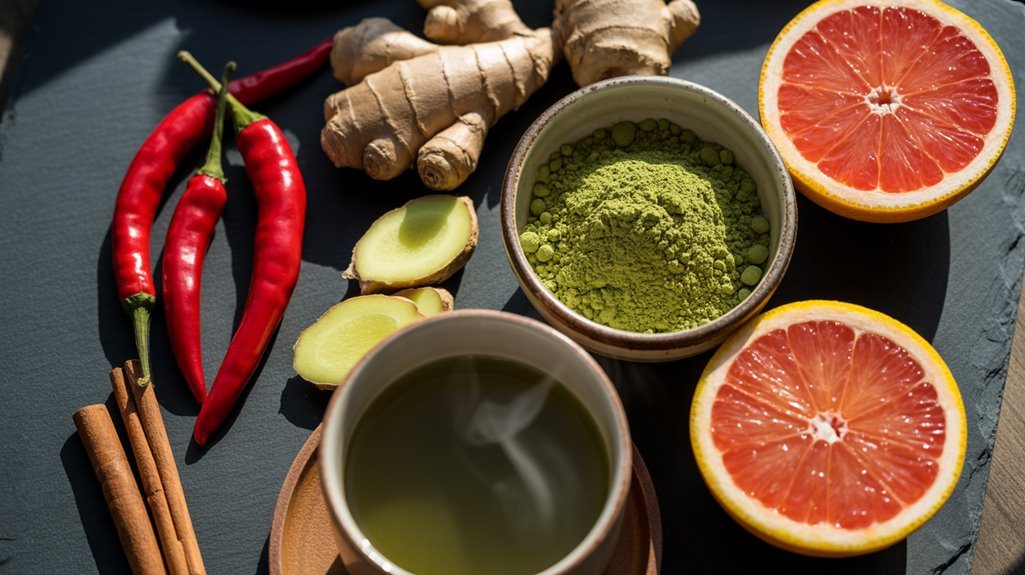
Now that you’ve learned about healthy fats, let’s examine thermogenic foods that naturally increase your metabolic rate and energy expenditure. Cayenne pepper‘s capsaicin content can raise your body temperature and boost metabolism by 5-15% for several hours post-consumption, while green tea‘s catechins and caffeine work synergistically to enhance fat oxidation by up to 17% during exercise. High-protein foods require 20-30% of their calories just for digestion through the thermic effect of food (TEF), making them particularly effective for increasing daily calorie burn.
Cayenne Pepper Benefits
When you add cayenne pepper to your meals, you’re activating one of nature’s most potent metabolic boosters through its active compound capsaicin. This thermogenic spice increases your body’s heat production, forcing it to burn additional calories for temperature regulation. Research shows capsaicin can enhance your metabolism boost by 5-15% for several hours post-consumption.
| Benefit | Mechanism |
|---|---|
| Fat Oxidation | Activates TRPV1 receptors |
| Appetite Control | Reduces ghrelin production |
| Energy Expenditure | Increases norepinephrine |
| Insulin Sensitivity | Improves glucose uptake |
| Lipid Profile | Decreases LDL cholesterol |
You’ll maximize cayenne pepper’s effectiveness by consuming 2-6 mg of capsaicin daily. Start with small amounts to assess tolerance, gradually increasing intake. Combine with protein-rich meals for synergistic thermogenic effects and sustained metabolic elevation.
Green Tea Effects
By drinking green tea regularly, you’ll harness the synergistic power of catechins and caffeine to accelerate fat oxidation and boost metabolic rate. The green tea benefits extend beyond simple hydration—you’re consuming bioactive compounds that directly influence adipose tissue metabolism.
Your body experiences these antioxidants impact through multiple pathways:
- EGCG activation – Triggers norepinephrine release, improving lipolysis
- Thermogenesis stimulation – Increases energy expenditure by 4-5% daily
- Adipocyte inhibition – Blocks formation of new fat cells
- Insulin sensitivity – Improves glucose uptake in muscle tissue
Research demonstrates you’ll burn approximately 75-100 additional calories daily when consuming 2-3 cups. The catechin-caffeine combination creates a metabolic environment that favors fat utilization over storage, particularly during moderate-intensity exercise.
Protein Metabolism Boost
Since protein requires 20-30% of its caloric value just for digestion and absorption, you’re automatically creating a metabolic advantage with every high-protein meal. This thermic effect of food (TEF) means you’ll burn approximately 100 calories digesting 400 calories of protein, compared to just 12-40 calories from equivalent carbohydrates or fats.
| Protein Source | TEF Impact |
|---|---|
| Lean meats | 25-30% |
| Fish/seafood | 20-25% |
| Eggs | 20-25% |
| Plant proteins | 15-20% |
You’ll maximize protein synthesis by consuming 25-30g per meal, providing essential amino acids for muscle maintenance. Studies demonstrate that higher protein intake preserves lean mass during caloric restriction while improving satiety hormones. By prioritizing protein-rich foods, you’re not only supporting muscle protein synthesis but also increasing daily energy expenditure through improved thermogenesis.
Low-Calorie, Nutrient-Dense Foods for Sustainable Weight Loss

You’ll achieve sustainable weight loss by incorporating foods that provide maximum nutrition with minimal calories. Fiber-rich options like leafy greens, cruciferous vegetables, and legumes enhance satiety through delayed gastric emptying while supporting metabolic health. Protein-packed choices including lean poultry, fish, and plant-based sources preserve muscle mass during caloric restriction and increase diet-induced thermogenesis.
Fiber-Rich Food Options
When you’re looking to reduce body fat through dietary changes, fiber-rich foods offer a scientifically proven advantage for sustainable weight loss. Dietary fiber benefits include enhanced satiety, improved glycemic control, and reduced caloric absorption. You’ll find soluble fiber slows gastric emptying, while insoluble fiber adds bulk without calories.
Optimal fiber sources for fat reduction include:
- Legumes – containing 15-20g fiber per cup
- Cruciferous vegetables – providing glucosinolates and 5-8g fiber per serving
- Whole grains – delivering beta-glucans and resistant starch
- Berries – combining fiber with polyphenols for metabolic enhancement
Research indicates consuming 25-35g daily promotes negative energy balance through increased thermogenesis and reduced lipid absorption. You’re effectively creating a 100-150 calorie deficit through fiber’s mechanical and metabolic actions alone.
Protein-Packed Meal Choices
Three critical factors determine protein’s effectiveness for body fat reduction: thermic effect, satiety signaling, and lean mass preservation during caloric deficit. You’ll burn 20-30% of protein calories during digestion, compared to 5-10% for carbohydrates and 0-3% for fats. Protein triggers peptide YY and GLP-1 release, suppressing ghrelin and extending fullness between meals.
For ideal results, apply portion control with 25-35 grams of protein per meal. During meal prep, prioritize lean sources: chicken breast (31g/4oz), Greek yogurt (20g/cup), lentils (18g/cup), and egg whites (11g/3 whites). You’ll maintain muscle mass while creating the necessary energy deficit for fat loss. Space protein intake every 3-4 hours to maximize muscle protein synthesis and metabolic rate throughout the day.
Hydrating Foods That Support Fat Metabolism
While proper hydration is essential for overall metabolic function, certain water-rich foods provide unique compounds that actively enhance fat metabolism beyond simple fluid replacement. Water rich fruits like watermelon contain citrulline, which improves mitochondrial function and lipid oxidation. Vegetable hydration from cucumbers delivers silica and potassium, supporting cellular energy production.
You’ll maximize fat-burning potential with these hydrating foods:
- Grapefruit – Contains naringenin, activating AMPK pathways for enhanced lipolysis
- Tomatoes – Provides 9-oxo-ODA, stimulating fatty acid oxidation
- Bell peppers – Delivers capsanthin, increasing thermogenic activity
- Celery – Supplies apigenin, promoting adipocyte browning
These foods’ bioactive compounds work synergistically with their water content, optimizing enzymatic reactions in fat metabolism. You’re not just hydrating—you’re actively supporting metabolic pathways that mobilize stored adipose tissue.
Timing Your Meals for Maximum Fat-Burning Benefits
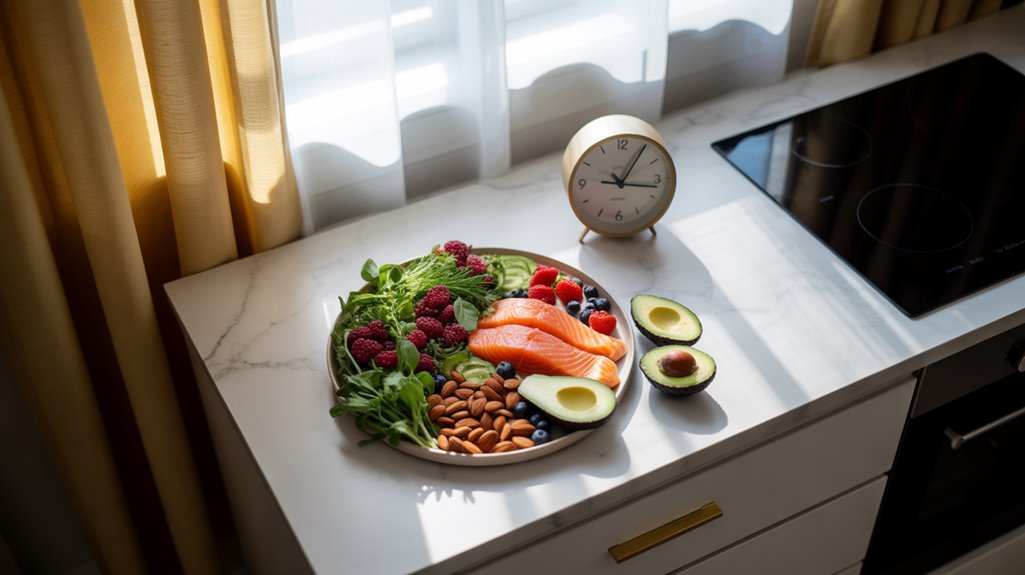
By synchronizing your eating patterns with circadian rhythms, you’ll optimize metabolic efficiency and enhance fat oxidation throughout the day. Research indicates that consuming larger meals earlier aligns with peak insulin sensitivity, while evening restriction supports nocturnal fat metabolism. You’ll benefit from establishing consistent meal frequency—typically three to four meals spaced 3-4 hours apart—to maintain stable blood glucose and prevent excessive ghrelin production.
Optimal timing involves front-loading calories within the first 8-10 hours after waking. You’re maximizing thermogenesis when metabolic rate naturally peaks between 10 AM and 2 PM. Post-workout nutrition within 30-60 minutes enhances muscle protein synthesis while promoting lipolysis. Consider adopting a 12-14 hour overnight fast to activate autophagy and increase growth hormone secretion, both vital for efficient fat utilization.
Frequently Asked Questions
Can I Eat These Fat-Burning Foods if I Have Diabetes?
You’ll need careful diabetes management when selecting foods. Monitor your blood glucose response to each food choice, as individual reactions vary. Consult your healthcare provider to guarantee these options align with your particular metabolic needs.
How Long Before I See Visible Results From Eating These Foods?
You’ll notice visible changes within 4-12 weeks when combining these foods with caloric deficit and exercise. Timeline expectations vary based on genetics, adherence, and baseline body composition. Research indicates sustainable fat loss averages 1-2 pounds weekly.
Are These Foods Safe to Consume During Pregnancy or Breastfeeding?
You’ll find most whole foods offer nutritional benefits during pregnancy and breastfeeding, but consult your healthcare provider first. They’ll recommend healthy alternatives if needed, ensuring ideal nutrient intake while considering individual medical conditions and dietary restrictions.
Will These Foods Interact With My Weight Loss Medications?
You’ll need to consult your healthcare provider about potential medication interactions. Certain foods can alter drug absorption, metabolism, or weight loss effects. They’ll assess your particular medications and dietary choices to guarantee safe, effective treatment outcomes.
Do I Need to Exercise While Eating These Fat-Burning Foods?
You’ll maximize exercise benefits when combining physical activity with nutrient timing. Research shows pre/post-workout meal timing enhances metabolic efficiency. While certain foods support thermogenesis, structured exercise remains essential for ideal body composition changes and health.
Conclusion
You’ve learned how particular foods directly impact your metabolic rate, satiety hormones, and thermogenesis. By incorporating high-protein options, fiber-rich vegetables, omega-3 fatty acids, and capsaicin-containing foods into properly timed meals, you’ll optimize lipolysis and maintain negative energy balance. Don’t rely solely on “fat-burning” foods—they’re tools within a thorough approach. Combine these evidence-based nutrition strategies with regular physical activity and adequate hydration for sustainable body composition changes and improved metabolic health.